In this article, we'll tell you why you should take creatine, and what the health benefits of creatine are.
What Is Creatine?
Creatine is an amino acid that mainly functions as an immediate source of energy to tissues with increased energy demands, such as muscle and brain, where it is mostly found1. Foods rich in creatine include animal products such as:
Specifically, about 95% of the creatine stores is found in the muscles and 5% is found in the brain2. That is why oftentimes, people take creatine because of its wonders on physical performance and muscle growth.
However, creatine is more than just for gym-goers and bodybuilders. Here are other benefits of creatine and reasons to take it.
Creatine - Health Benefits
1. It may boost brain function and cognition.
Creatine is known to play a role in maintaining energy balance in the brain. Among vegetarian young adults whose creatine levels are often low due to non-consumption of animal products, supplementation of creatine has been shown to boost memory and intelligence scores by 20-50%3.
The same was found in a study on creatine supplementation among elderly. The subjects saw improvements in long-term memory when supplemented with 20g of creatine for 1 week.4-5
2. It has antioxidant properties.
Recent studies demonstrate that long-term creatine supplementation (along with moderate-intensity resistance and endurance training) may reduce oxidative stress and increase the antioxidant defense system6.
3. It may improve gut health.
Dietary creatine supplementation plays an important role in maintaining gut barrier function.
One case study from the American College of Gastroenterology Case Reports Journal of a 33-year old man with Crohn’s Ileitis (inflammation of the ileum caused by Crohn’s Disease), showed that creatine supplementation of 1,034 g/day showed significant improvements in the patient’s symptoms7.
4. It helps improve the skin.
According to recent studies, creatine may be beneficial for skin health.
Particularly, several studies suggest that creatine may help:
- decrease the appearance of wrinkles,
- increase skin firmness,
- repair the skin,
- protect DNA cells from UV damage.
It may also stimulate collagen which is beneficial for the skin8-9.
5. It may have antiviral properties.
One study demonstrates that creatine may be used as an antiviral agent specifically against DNA viruses by inhibiting the production of these viruses10.
Creatine Supplementation
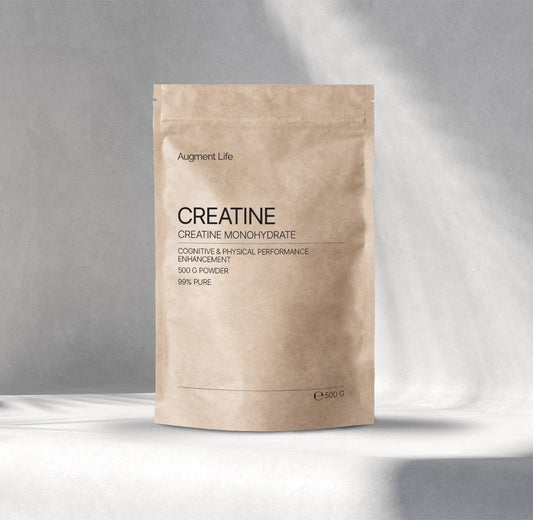
Creatine is one of the most tested supplements in the world and is generally considered safe. It is usually sold in the form of creatine monohydrate.
Although there is no one best time to take creatine, absorption may be improved if you take it with a meal.
In addition, creatine absorption appears to be stimulated by insulin. Therefore, ingesting creatine supplements in combination with carbohydrate, amino acids, or protein may help provide better absorption11.
Final Words
Creatine is a safe and powerful supplement that can support not just physical performance, but also provides numerous benefits for our overall well-being.
When trying out creatine, creatine monohydrate is the best form because it has the best safety record, most scientific support, and provides maximum effectiveness for the lowest price.
References:
- Persky, A. M., & Brazeau, G. A. (2001). Clinical pharmacology of the dietary supplement creatine monohydrate. Pharmacological reviews, 53(2), 161–176.
- Mawer, R. (2022, May 18). Creatine 101: What is it and what does it do? Healthline. Retrieved January 18, 2023, from https://www.healthline.com/nutrition/what-is-creatine#basics.
- Rae, C., Digney, A. L., McEwan, S. R., & Bates, T. C. (2003). Oral creatine monohydrate supplementation improves brain performance: a double-blind, placebo-controlled, cross-over trial. Proceedings. Biological sciences, 270(1529), 2147–2150. https: //doi.org/10.1098/rspb.2003.2492.
- McMorris, T., Mielcarz, G., Harris, R. C., Swain, J. P., & Howard, A. (2007). Creatine supplementation and cognitive performance in elderly individuals. Neuropsychology, development, and cognition. Section B, Aging, neuropsychology and cognition, 14(5), 517–528. https: //doi.org/10.1080/13825580600788100.
- Smith, R. N., Agharkar, A. S., & Gonzales, E. B. (2014). A review of creatine supplementation in age-related diseases: more than a supplement for athletes. F1000Research, 3, 222. https: //doi.org/10.12688/f1000research.5218.
- Arazi, H.; Eghbali, E.; Suzuki, K. Creatine Supplementation, Physical Exercise and Oxidative Stress Markers: A Review of the Mechanisms and Effectiveness. Nutrients 2021, 13, 869. https: //doi.org/10.3390/nu13030869.
- Roy, A., & Lee, D. (2016). Dietary Creatine as a Possible Novel Treatment for Crohn's Ileitis. ACG case reports journal, 3(4), e173. https://doi.org/10.14309/crj.2016.146.
- Topical application of creatine is multibeneficial for human skin. (2005). Journal of the American Academy of Dermatology, 52(3), P32. https://doi.org/10.1016/j.jaad.2004.10.143.
- Peirano, R. I., Achterberg, V., Düsing, H. J., Akhiani, M., Koop, U., Jaspers, S., Krüger, A., Schwengler, H., Hamann, T., Wenck, H., Stäb, F., Gallinat, S., & Blatt, T. (2011). Dermal penetration of creatine from a face-care formulation containing creatine, guarana and glycerol is linked to effective antiwrinkle and antisagging efficacy in male subjects. Journal of cosmetic dermatology, 10(4), 273–281. https://doi.org/10.1111/j.1473-2165.2011.00579.
- Kaddurah-Daouk, R. (1991, December 20). Creatine analogs having antiviral activity. https://patents.google.com/patent/WO1993012781A2/en.
- Raymond, J. L., & Morrow, K. (2022). Krause and mahan’s food and the nutrition care process (16th ed.). Philadelphia, PA: Saunders.