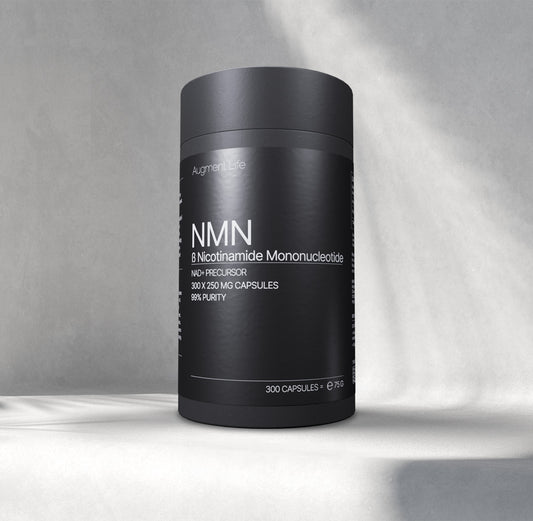

NMN and NR are both precursor molecules for the synthesis of NAD+, a natural molecule very important for cell energy production and signaling. Since NAD+ cannot be absorbed properly if we take it orally, NMN and NR have become potent and interesting supplements to treat age-related NAD+ loss.
Keep reading and find out how NMN and NR compare in efficacy and potency.
NMN supplement - benefits
NMN stands for nicotinamide mononucleotide and it's closer in molecular structure to NAD+ than NR, simply because it's more "down the line" toward NAD+ synthesis. It has gained a lot of traction in scientific circles in the past decades, and more and more studies on its efficacy and safety are being conducted as we speak.
So far, most of the research on NMN has been done in cell culture and animal studies. Even though those are not human clinical trials, they are not to be diminished because if a molecule does not show its potency in those early trials, it will never come to the clinical trial. With that being said, the benefits of NMN observed in animal studies are:
- increased energy expenditure,
- improved cognitive function,
- improved cardiovascular function,
- improved glucose metabolism,
- improved eye function,
- increased insulin sensitivity,
- suppression of age-related weight-gain.
Moreover, NMN was found to quickly and successfully convert to NAD+ when administered orally in mice. Read more about the benefits of NMN and find more info on animal studies here.
What is the situation with NMN supplements and human studies? There are, of course, less studies on NMN effects on humans. Nevertheless, many of them show NMN is safe to take throughout a short period of time, well-tolerated, and quickly metabolized into NAD+.
Besides safety and side-effects, the following advantages of NMN supplementation were noticed:
- young adult runners had a higher aerobic capacity when taking NMN supplements after 6 weeks,
- older adults had an improved lower limb function when taking NMN during 12 weeks,
- there was an improvement in the left-hand grip of mostly right-handed older healthy male individuals after taking NMN.
These studies were all published earlier than 2023, and you can read more about them here. Since then, a couple of small clinical trials on NMN have been completed and published as scientific papers. Newest research on NMN shows:
- NMN supplementation was safe and well-tolerated, even when the daily doses were 900 mg. Physical performance of middle-aged healthy adults improved significantly when taking NMN and was the best in the group that was administered 600 mg daily (https://www.ncbi.nlm.nih.gov/pmc/articles/PMC9735188/),
- NMN supplementation in middle-aged participants over 12 weeks showed no significant difference between the test and placebo group when arterial stiffness was measured. However, it did show potential, while the administered dose of 250 mg/day was well-tolerated and showed no adverse effects (https://pubmed.ncbi.nlm.nih.gov/36797393/).
- Daily administration of 250 mg of oral NMN in healthy adults resulted in increased NAD+ and insulin concentrations in plasma after having a meal. No adverse effects were noticed (https://clinicalnutritionespen.com/article/S2405-4577(23)00124-9/fulltext).
More clinical trials on NMN are currently in progress.
Because the FDA approved studying NMN as a potential novel drug, it removed it from its list of food supplements. However, that does not mean NMN cannot be used as a supplement as well.
Nicotinamide riboside (NR)
NR or nicotinamide riboside is another precursor of NAD+, but unlike NMN, it is an "earlier" one in the synthesis pathway. Although that means NR is structurally less similar to NAD+, it does not mean its presence doesn't lead to NAD+ creation. NR is often named "niagen", and it belongs to the vitamin B3 family like NMN.
NR is a natural product of living organisms that can be found in either food or supplements. Foods containing a high amount of NR are:
- edamame,
- avocado,
- seafood,
- raw meat,
- mushrooms,
- human milk,
- bovine milk,
- yeast (beer).
Supplements offer a much higher concentration of NR, especially because it can be taken in its pure form. They usually contain from 100 to 1000 mg of NR per capsule in powder form.
NR supplement - benefits
As a precursor of NAD+, NR potentially offers a wide range of health benefits.
The first proven benefit of NR is that it is easily and quickly converted into NAD+, even up to 2.7 times after taking a single oral dose. Single doses of 100, 300, and 1000 mg of NR produced dose-dependent increases of NAD+ in blood. However, this research was sponsored by NR-selling companies and is only preliminary (3). On the other hand, it was found in middle-aged and older individuals that chronic NR supplementation over 2 x 6 weeks is safe, well-tolerated, and increases NAD+ levels (4).
Another proven benefit of NR supplementation in humans is the decrease of aorta stiffness and blood pressure in middle-aged and older adults. It means that 500 mg of NR twice a day throughout 6 weeks made the hearts of participants significantly healthier, and it increased NAD+ levels in the blood (5). Moreover, a daily dose of 1000 mg NR over 6 weeks increased skeletal muscle NAD+ metabolites, affected skeletal muscle acetylcarnitine metabolism, and had a minor effect on body composition and sleeping metabolic rate in healthy overweight or obese men and women (6).