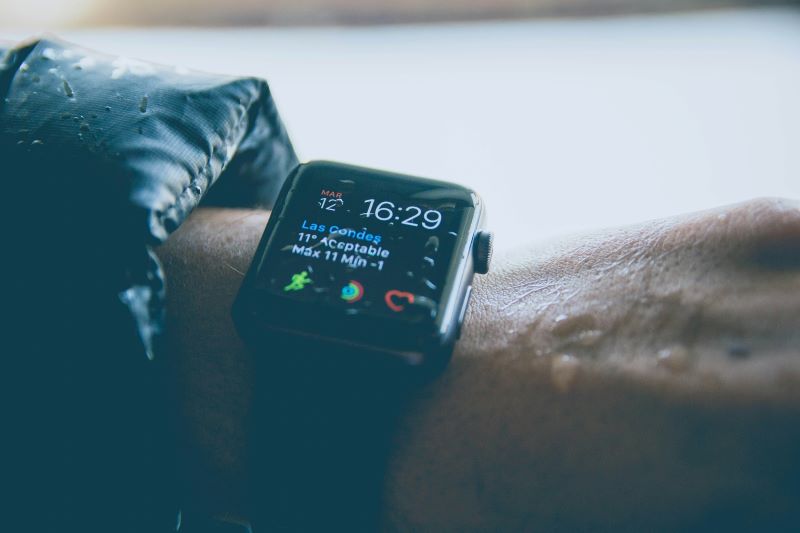

The market for heart rate trackers has exploded into a multi-million-dollar industry, with competitive runners and endurance athletes relying on wrist-worn devices to refine their training. These smart wearables track essential metrics like distance, pace, heart rate (HR), and performance zones, offering real-time insights to optimize workouts.
Heart rate monitoring is crucial for evaluating fitness progress. It assists runners in maintaining the appropriate intensity during long-distance runs, interval training, and hill sprints. The ease and comfort of wrist-based trackers have made them the preferred choice over traditional chest straps, which use electrodes to measure cardiac electrical activity (1).
If you are interested in the benefits of utilizing a heart rate tracker, HRV, and VO₂ Max tracking, continue reading this article to gain more insight into its advantages.
How smart devices are revolutionizing health tracking
Wearable technology is becoming more popular in sports and health, with athletes, patients, and fitness enthusiasts using it to track performance and well-being.

The idea that exercise works better than medicine is gaining traction, encouraging doctors to include physical activity in routine health check-ups. In this context, fitness trackers and smartwatches play a key role in boosting performance and preventing injuries.
Research shows that public interest in wearable fitness devices has increased since 2020, showing that more people see them as tools to improve their quality of life. Whether for tracking workouts, monitoring heart health, or optimizing training, wearable tech is becoming an essential part of modern health and fitness routines (4).
Heart rate tracker: which type is the best for you?
It is important to remember that when choosing a heart rate monitor, choose one based on your specific activity level. Several high-end devices track Heart Rate (HR), Heart Rate Variability (HRV), and VO₂ Max. Here are some of the categories that are available in the market:
- Smartwatches & fitness trackers,
- Chest straps (electrocardiogram (ECG)-based),
- Hybrid approach (chest strap + smartwatch for best accuracy).
The difference between the categories is related to your budget or the specific sports that you will need. Each one of the categories has pros and cons. You might choose to learn and understand more about each one to decide what is best for you.
Distinct types of heart rate trackers have varying levels of clinical validation and scientific evidence supporting their accuracy. Here is what research and clinical studies say about each type:
Chest strap monitors
Chest strap monitors are widely used for athletes during training. Their accuracy is reliable, and it has a low error rate. The only problem with this option is that daily use can be uncomfortable and challenging.
Based on clinical evidence, strap monitors provide readings that can be comparable to ECG machines. The examples of this category of monitors are the Polar H10 and Garmin HRM-Pro; both are used in sports science and clinical studies. Despite that, they are not FDA-approved for use in medical diagnosis but are considered a gold standard for fitness tracking.
A study published in the Journal of Sports Science & Medicine confirms that chest straps provide superior accuracy for HR and physiological metric tracking compared to vests, making them a more reliable option for athletes looking to optimize their training (2).
Wrist-based trackers (Smartwatches & fitness trackers)
These are trackers that are placed on the wrist (fitness trackers, smartwatches). Though less accurate, the wrist-based gadgets are practical and simple to use. Based on studies, wrist-based sensors may make mistakes more frequently, particularly when moving.
The Food and Drug Administration (FDA) has approved the ECG capabilities of the Samsung Galaxy Watch, Fitbit Sense, and Apple Watch (Series 4 and later), but it is helpful to know that fitness, skin tone, and activity all affect accuracy.