So how should you actually take a liposomal supplement? If you're new to the topic, our guide Are Liposomal Formulations of Supplements Better? covers whether they're worth it in the first place. Here, we'll focus on getting the most out of one once you've decided to try it.
If you've searched online, you've probably encountered a long list of recommendations: take liposomal supplements on an empty stomach, avoid coffee, pair them with dietary fat, or wait before eating. Fortunately, recent research provides a clearer picture of what matters most.
Should You Take Liposomal Supplements on an Empty Stomach?
No. There's currently no clinical evidence that taking a liposomal supplement on an empty stomach improves absorption. Some manufacturers recommend it anyway, but this is a precaution, not a proven benefit.
Once swallowed, a liposome has to survive stomach acid, digestive enzymes, and bile salts before it even reaches the intestine, where absorption happens. That journey is broadly the same whether or not there's food in your stomach at the time (1). For most healthy adults, taking a liposomal supplement consistently is likely to matter more than whether it is taken before or after a meal.
However, this doesn't necessarily apply to the nutrient inside the liposome. Liposomal delivery changes how a compound is transported, but it doesn't automatically replace the usual advice for the active ingredient. Berberine is commonly associated with digestive side effects, including diarrhoea and abdominal discomfort, which is part of why it's often taken with meals in clinical practice (2). By contrast, food appears to delay how quickly resveratrol is absorbed without meaningfully changing the total amount absorbed (3).
Whether to take it with food depends on the nutrient, not the liposome.
Does Time of Day Matter?
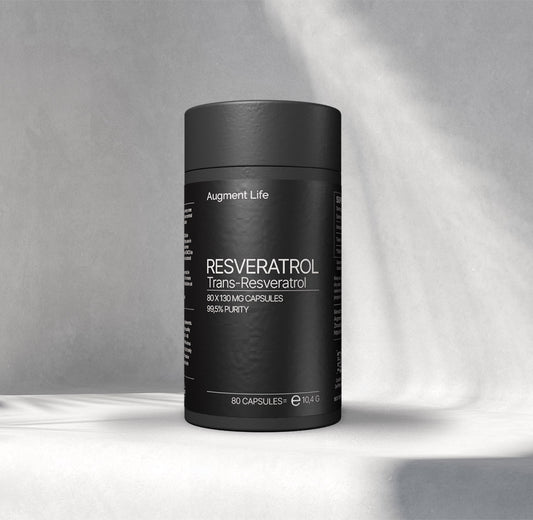
Rarely for absorption. Resveratrol is the exception: a repeated-dose pharmacokinetic study found that trans-resveratrol follows a circadian pattern, with bioavailability higher after morning doses (4). That's a property of the resveratrol molecule, not the liposome carrying it.
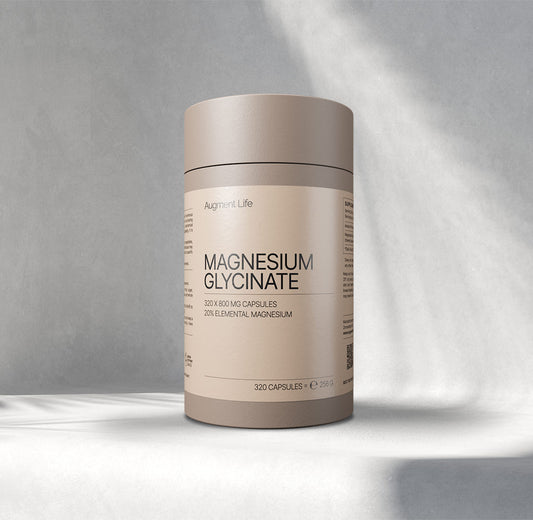
Other scheduling habits, like splitting berberine doses across the day (5), taking B vitamins in the morning (6), or magnesium in the evening (7), are about matching the dose to when it's actually useful, not about absorption.
What about Coffee?
Some manufacturers recommend avoiding coffee when taking liposomal supplements. It's a reasonable-sounding rule, but it comes from lab studies on liposomes in food and drink, not from anyone testing coffee and liposomal supplements together in people (8).
Those studies found that liquid liposomes are sensitive to their surrounding environment and can gradually destabilise when exposed to acidity, heat, or dissolved salts and sugars (8). That's a real consideration if you're mixing liquid liposomal drops directly into a hot coffee, but it doesn't apply to simply drinking coffee around the same time as taking a capsule, where there's no meaningful contact between the two.
Liquid or Capsule: Which Is Better?
Beyond food and timing, the biggest practical difference between liposomal supplements comes down to format, and neither one is without trade-offs.
Liquid liposomes are ready to absorb the moment you take them, with nothing left to happen inside your body first. But sitting in water from the moment they're made exposes them to oxygen, heat, acidity, and dissolved salts and sugars, all of which can degrade the membrane over time (8).
Capsules solve that storage problem. These dry formulations, known as proliposomes, are manufactured and stored as a powder that only forms liposomes once hydrated during digestion, avoiding many of the degradation risks liquid liposomes face.
Either way, every liposome still has to survive stomach acid and bile salts to reach the intestine intact (1). Format determines how well a supplement holds up in your cupboard.
Read more in our related guides: Berberine: Resveratrol: Benefits and How Much to Take, Does Liposomal Make a Difference?,
Are Liposomal Formulations of Supplements Better?, How Much Trans-Resveratrol Should I Take?
Augment Life offers a wide range of liposomal supplements. More information about some of them can be found here: Liposomal Berberine, Liposomal Resveratrol, Liposomal NR, Liposomal NMN, Liposomal Bundle
Practical Takeaways
-
Food depends on the nutrient. Liposomal delivery doesn't necessarily change the usual guidance for the active ingredient it carries.
-
Time of day sometimes matters. Resveratrol absorbs best in the morning; most other timing habits, like splitting berberine or taking magnesium at night, are about effect rather than absorption.
-
Coffee is fine with one exception. It hasn't been shown to reduce effectiveness in human studies, but avoid mixing liquid liposomal drops directly into a hot drink, since heat and acidity can destabilise the liposome.
-
Format has trade-offs either way. Liquid is ready to absorb immediately but degrades in storage; capsules store better but depend on properly forming into liposomes during digestion.
-
Consistency matters most overall. Beyond resveratrol's morning edge, timing is about routine, not absorption.
Literature Sources
- He H, Lu Y, Qi J, Zhu Q, Chen Z, Wu W. Adapting Liposomes for Oral Drug Delivery. Acta Pharmaceutica Sinica B. 2019;9(1):36–48. doi:10.1016/j.apsb.2018.06.005
- Dong H, Wang N, Zhao L, Lu F. Berberine in the Treatment of Type 2 Diabetes Mellitus: A Systematic Review and Meta-Analysis. Evidence-Based Complementary and Alternative Medicine. 2012;2012:591654. doi:10.1155/2012/591654
- Vaz-da-Silva M, Loureiro AI, Falcão A, Nunes T, Rocha J-F, Fernandes-Lopes C, Soares E, Wright L, Almeida L, Soares-da-Silva P. Effect of Food on the Pharmacokinetic Profile of Trans-Resveratrol. International Journal of Clinical Pharmacology and Therapeutics. 2008;46(11):564–570. doi:10.5414/CPP46564
- Almeida L, Vaz-da-Silva M, Falcão A, Soares E, Costa R, Loureiro AI, Fernandes-Lopes C, Rocha J-F, Nunes T, Wright L, Soares-da-Silva P. Pharmacokinetic and Safety Profile of Trans-Resveratrol in a Rising Multiple-Dose Study in Healthy Volunteers. Molecular Nutrition & Food Research. 2009;53(Suppl 1):S7–S15. doi:10.1002/mnfr.200800177
- Khoshandam A, Imenshahidi M, Hosseinzadeh H. Pharmacokinetic of Berberine, the Main Constituent of Berberis vulgaris L.: A Comprehensive Review. Phytotherapy Research. 2022;36(11):4063–4079. doi:10.1002/ptr.7589
- Parra M, Stahl S, Hellmann H. Vitamin B6 and Its Role in Cell Metabolism and Physiology. Cells. 2018;7(7):84. doi:10.3390/cells7070084
- Barbagallo M, Veronese N, Dominguez LJ. Magnesium in Aging, Health and Diseases. Nutrients. 2021;13(2):463. doi:10.3390/nu13020463
- Mankan E, Karakas CY, Saroglu O, Mzoughi M, Sagdic O, Karadag A. Food-Grade Liposome-Loaded Delivery Systems: Current Trends and Future Perspectives. Foods. 2025;14(17):2978. doi:10.3390/foods14172978