Choosing a longevity supplement comes down to five checks: the exact milligram amount of each active ingredient, whether an independent laboratory has tested it, whether there's human evidence behind the dose you're taking, the manufacturing standards behind it, and the delivery format for anything fat-soluble. Two products built around the same headline ingredient can differ on all five.
None of that is visible from the front of the pack. It's on the back of the label, in the numbers per serving, and in the documents a brand does or does not publish alongside it.
What Criteria Should I Prioritise When Choosing a Longevity Supplement?
Each of the five checks above can be verified directly on a product page, or in the documents a brand publishes alongside it. The rest of this guide walks through what to look for.
Why the Exact Amount Matters
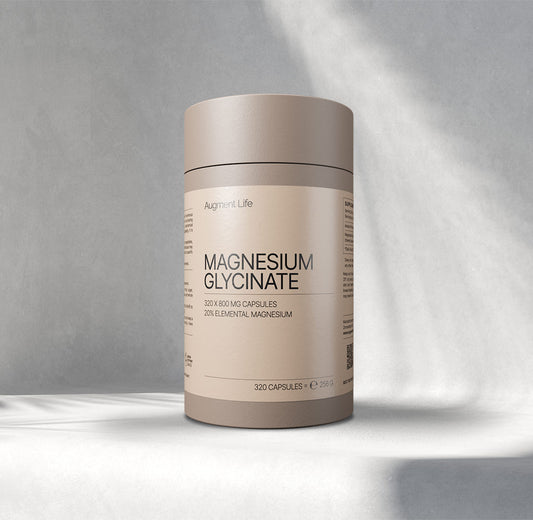
The figure on the front of a label is not always the figure that counts. A magnesium glycinate capsule contains far more of the compound than of magnesium itself: Augment Life's Magnesium Glycinate is 800 mg of magnesium glycinate, of which 160 mg is elemental magnesium. Both numbers are on the label. A product that gives only one of them leaves you guessing which figure you are buying.
Clinical trials are run at doses. Without a milligram figure for each ingredient, you cannot compare a product with the research behind it, or with the product next to it on the shelf.
Look for a separate figure per ingredient, and check it against the serving size rather than the capsule. A product listing 500 mg per serving at two capsules a day is a different purchase from one listing 500 mg per capsule.
What Does Third-Party Testing Actually Prove?
It tells you whether a sample met the specifications that were actually tested. Depending on the analysis, that can include ingredient identity, active-ingredient content, purity, microbiology, or contaminants such as heavy metals. A heavy-metals screen does not confirm potency, and a purity assay does not automatically confirm identity; a certificate of analysis only covers what it actually analysed.
It does not prove the ingredient does anything. Purity and efficacy are separate questions.
Two details separate real testing from a badge. Whether samples go to the laboratory regularly rather than once at launch, and whether the report is published where you can read it. Augment Life publishes its laboratory reports in the image gallery on each product page and on its Third Party Analysis page.
Does It Matter Where a Supplement Is Made?
Manufacturing standards are one of the few things a buyer can check without specialist knowledge, though this half of the picture is harder to verify than a dose on a label. Where a product is made is not, by itself, a strong signal. Facility certification, batch-level testing, and whether results are actually published tell you considerably more than a country of origin.
Augment Life's suppliers hold ISO 9001 and ISO 22000 certification, alongside GMP standards covering food safety and manufacturing practice, including storage conditions that matter for compounds that degrade with heat or humidity. Ingredients are tested for purity by the BAV Institut before use, and finished products are sent to independent laboratories including JS Hamilton and Eurofins for further quality control. Each published report carries the date it was issued.
That verification is what gives a label something behind it.
Why Format Matters for Poorly Absorbed Compounds
The milligrams on the label are what goes in, not what reaches your blood.
Coenzyme Q10 shows it. It is one of the most water-repelling molecules the body makes, and only a small fraction of an oral dose is absorbed (1). Compounds that are poorly absorbed to begin with, CoQ10 among them, are the ones where the format is worth paying attention to.
Liposomal formulations are one approach used to improve absorption, though results depend heavily on the specific formulation rather than on liposomal delivery as a general rule (2).
Should You Build Your Own Routine, or Buy One Ready-Made?
It comes down to how hands-on you want to be. Whichever route you take, it's worth knowing that the evidence behind these seven ingredients sits at different stages, from established human trials to earlier mechanistic research.
Building your own gives the most control: you can start one ingredient at a time, adjust a dose, and drop anything that is not earning its place.
A bundle removes the assembly but keeps every compound in its own container. Augment Life's Longevity Bundle + groups seven compounds into one routine, each doing a different job:
Nicotinamide riboside replenishes NAD+, used for energy metabolism and DNA repair (3).
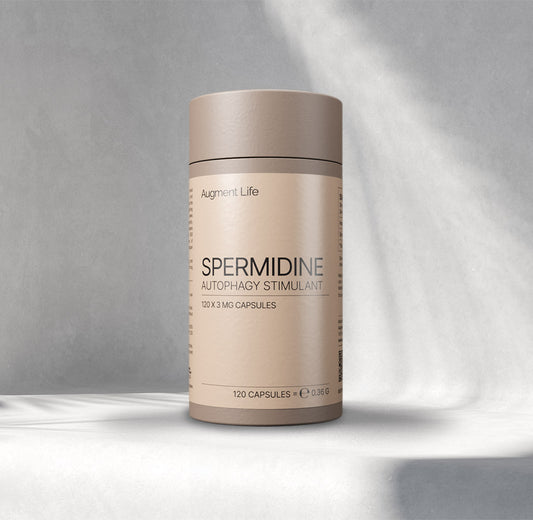
Spermidine has been studied for its role in autophagy, the process that clears and recycles damaged cell components (4).
Magnesium glycinate carries two authorised EU health claims: magnesium contributes to normal muscle function and to normal functioning of the nervous system.
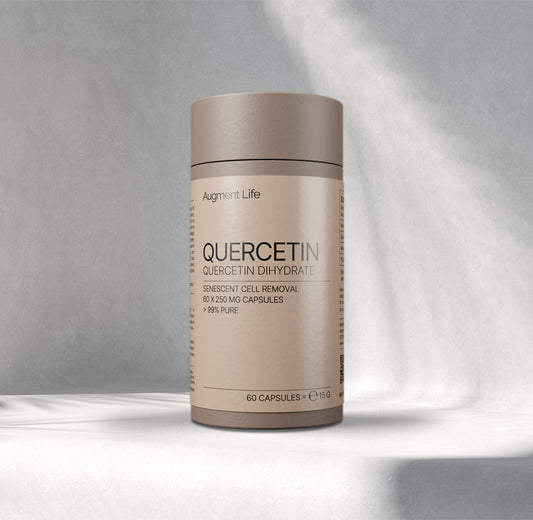
Quercetin has been studied for its antioxidant activity in experimental research (5).
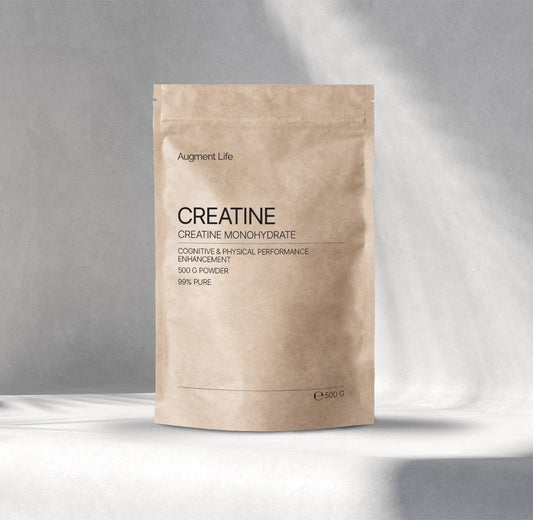
Creatine monohydrate's role in high-intensity exercise is well established and links to cognitive function are developing (6, 7, 8).
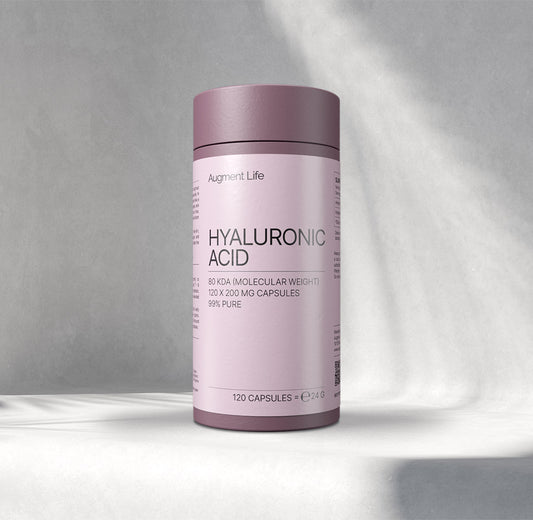
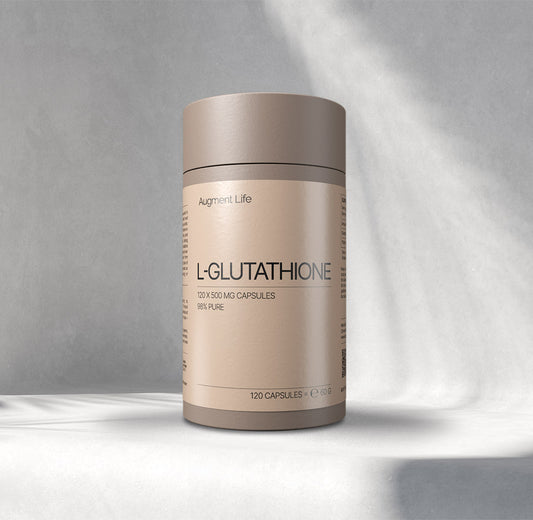
Hyaluronic acid and L-glutathione round things out: the first is naturally occurring in skin and connective tissue with a high capacity to bind water (9), the second is the cell's main internal antioxidant and a contributor to the liver's detoxification pathways (10).
An all-in-one formula removes the decisions entirely. Longevity Formula puts berberine, studied for its role in metabolic health (11); nicotinamide riboside, linked to NAD+ (3); quercetin, studied for antioxidant activity (5); coenzyme Q10, central to cellular energy production (1); and spermidine, studied for its role in autophagy (4). Every amount is stated separately, which is the first thing to look for in any product, ready-made or not.
A separate guide covers the most studied longevity compounds in more detail.
The Short Version
Before you buy, check:
- a stated milligram figure for every active ingredient
- the serving size those figures refer to
- a recent third-party laboratory report you can actually open
- human evidence behind the dose you're taking
- manufacturing standards, batch testing and whether results are published
- the delivery format, for anything fat-soluble
- whether the daily routine is one you will still be following in three months
Read More
References
- Mantle D, López-Lluch G, Hargreaves IP. Coenzyme Q10 Metabolism: A Review of Unresolved Issues. International Journal of Molecular Sciences. 2023;24(3):2585. https://doi.org/10.3390/ijms24032585
- Amalraj A, Abraham EK, Jogy AM, Gopi S. Next-generation liposomal coenzyme Q10: from formulation to clinical evidence via metazome technology for improved stability and enhanced oral absorption. Food & Function. 2026. https://doi.org/10.1039/d5fo05217c
- Covarrubias AJ, Perrone R, Grozio A, Verdin E. NAD+ metabolism and its roles in cellular processes during ageing. Nature Reviews Molecular Cell Biology. 2021;22(2):119-141. https://doi.org/10.1038/s41580-020-00313-x
- Madeo F, Eisenberg T, Pietrocola F, Kroemer G. Spermidine in health and disease. Science. 2018;359(6374):eaan2788. https://doi.org/10.1126/science.aan2788
- Aghababaei F, Hadidi M. Recent Advances in Potential Health Benefits of Quercetin. Pharmaceuticals. 2023;16(7):1020. https://doi.org/10.3390/ph16071020
- Kreider RB, Kalman DS, Antonio J, Ziegenfuss TN, Wildman R, Collins R, et al. International Society of Sports Nutrition position stand: safety and efficacy of creatine supplementation in exercise, sport, and medicine. Journal of the International Society of Sports Nutrition. 2017;14:18. https://doi.org/10.1186/s12970-017-0173-z
- Prokopidis K, Giannos P, Triantafyllidis KK, Kechagias KS, Forbes SC, Candow DG. Effects of creatine supplementation on memory in healthy individuals: a systematic review and meta-analysis of randomized controlled trials. Nutrition Reviews. 2023;81(4):416-427. https://doi.org/10.1093/nutrit/nuac064
- Marshall S, Kitzan A, Wright J, Bocicariu L, Nagamatsu LS. Creatine and cognition in aging: a systematic review of evidence in older adults. Nutrition Reviews. 2026;84(2):333-344. https://doi.org/10.1093/nutrit/nuaf135
- Papakonstantinou E, Roth M, Karakiulakis G. Hyaluronic acid: a key molecule in skin aging. Dermato-Endocrinology. 2012;4(3):253-258. https://doi.org/10.4161/derm.21923
- Wu G, Fang YZ, Yang S, Lupton JR, Turner ND. Glutathione metabolism and its implications for health. The Journal of Nutrition. 2004;134(3):489-492. https://doi.org/10.1093/jn/134.3.489