As the years go by, recovery tends to take longer. A long hike or a heavy session at the gym that once left you stiff for a day can now linger for 3, and a stressful week can leave you feeling flat well into the next.
Much of that recovery happens while you sleep. So which is more important for it: deep sleep or rapid eye movement (REM) sleep?
What Does Deep Sleep Do for Recovery?
Deep sleep is when the body does much of its physical repair. During this stage, it releases growth hormone, which helps rebuild muscle and other tissue. The more deep sleep you get, the more growth hormone you tend to release. As you get older, both decline (1), which may partly explain why recovery slows.
Just one night without sleep slowed muscle protein synthesis, the process that builds and repairs muscle, by 18% in healthy young adults (2). Over time, sleep may affect how well you hold on to muscle as you age. Adults over 60 who regularly slept less than 6 hours, or more than 8, were more likely to lose muscle mass and strength over 3 years. The long sleepers also spent more time sitting during the day, which may explain part of the link (3).
Deep sleep helps the brain too. Older adults, with an average age of 72, had far less deep sleep than young adults and remembered less of what they had learned the evening before. The front of the brain generates many of the slow brain waves of deep sleep, and in this group, the more this area had shrunk, the less deep sleep they got (4). Deep sleep may also calm an anxious mind. Anxiety rose after a sleepless night, while people who got more deep sleep felt less anxious the next day (5).
What Does REM Sleep Do for Recovery?
REM sleep seems to help you hold on to what you practised. After people learned a new trampoline routine, their REM sleep the following night increased slightly, and the researchers advise not cutting REM short after learning a complex skill (6).
Light sleep, as well as REM, helps lock in new skills. People who practised a typing sequence in the evening improved by about 20% after a night's sleep, and the size of the gain tracked how much light sleep they had late in the night (7).
REM may also take the edge off difficult experiences. After a night's sleep, upsetting images feel less intense and the brain's alarm centre, the amygdala, reacts less to them, a change linked to REM sleep (8). UC Berkeley sleep scientist Dr Matthew Walker, whose lab ran the research, calls this overnight therapy.
Is Deep Sleep or REM More Important for Recovery?
Both deep sleep and REM help with recovery, in different ways. Deep sleep may do more for your body, helping your muscles and tissues recover from exercise. Both stages appear to help your mind recover from stress, and REM may also help you keep what you practised.
How Does Cutting Sleep Short Affect Recovery?
Going to bed later and waking up earlier both shorten your night, but they cut into different stages. Most deep sleep comes in the first third of the night, while REM periods get longer towards morning (9).
- An early alarm mostly costs REM and light sleep, the stages linked to learning and mood.
- A late night tends to protect deep sleep and the physical repair that comes with it, because the longer you have been awake, the deeper your first hours of sleep (10).
-
Alcohol delays REM and, at higher amounts, reduces it (11).
Either way you lose sleep, so a full night remains the goal.
Waking early becomes more of a problem with age, when recovery is already slower. The body clock shifts forward, and adults over 65 often wake about 1.5 hours earlier than adults in their 20s (12). If you still go to bed at your usual time, that lost time comes out of your REM.
Clock changes and jet lag can do something similar for a few days. After the clocks go back in autumn, or a flight west, your body still runs on the old time and may wake you too soon. Keeping your usual wake time on the new clock, and going to bed a little later for a few nights, may help it adjust.
Can Supplements Help With Recovery?
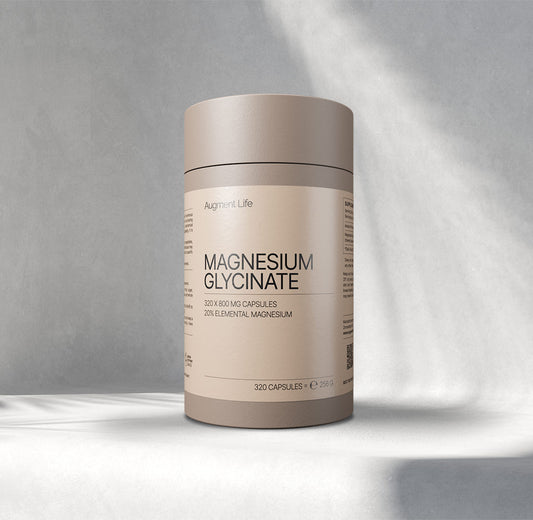
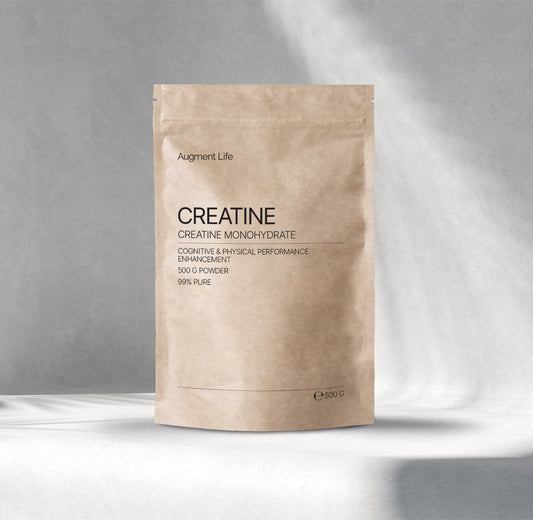
Magnesium contributes to normal muscle function and to the reduction of tiredness and fatigue, and creatine increases physical performance in successive bursts of short-term, high-intensity exercise, with a daily intake of 3 g (13). For adults over 55 who do regular resistance training, daily creatine can enhance the effect of that training on muscle strength. This applies to 3 g of creatine a day alongside resistance training at least 3 times a week for several weeks, at 65 to 75% of the heaviest weight you can lift once, with the load increasing over time (14). We look at magnesium for exercise in Why Athletes Need Magnesium and at creatine in How Much Creatine Do I Need?.
If you are travelling across time zones, melatonin contributes to the alleviation of subjective feelings of jet lag, with at least 0.5 mg taken close to bedtime on the first day of travel and for the following few days (13).
The Takeaway
Deep sleep does more of the body's repair work, while both stages seem to help the mind recover from stress. Giving yourself a full night protects both. And if recovery is taking longer than it used to, improving your sleep quality may be the simplest place to begin. What Affects Sleep Quality, and How Can You Improve It? covers what helps.
Shop the supplements from this article:
If you take regular medication or have a kidney condition, check with your doctor or pharmacist before starting a new supplement.
Food supplements are not a substitute for a varied, balanced diet and a healthy lifestyle. This article is not medical advice.
Read More
Literature Sources
- Van Cauter E, Leproult R, Plat L. Age-related changes in slow wave sleep and REM sleep and relationship with growth hormone and cortisol levels in healthy men. JAMA. 2000;284(7):861-868. https://doi.org/10.1001/jama.284.7.861
- Lamon S, Morabito A, Arentson-Lantz E, Knowles O, Vincent GE, Condo D, et al. The effect of acute sleep deprivation on skeletal muscle protein synthesis and the hormonal environment. Physiological Reports. 2021;9(1):e14660. https://doi.org/10.14814/phy2.14660
- Han P, Hou L, Liang Z, Chen W, Li J, Cheng Y, et al. Both Short and Long Sleep Durations are Risk Factors for Sarcopenia in Suburban-Dwelling Older Chinese Individuals: A 3-Year Longitudinal Study. Nature and Science of Sleep. 2022;14:1089-1096. https://doi.org/10.2147/NSS.S361925
- Mander BA, Rao V, Lu B, Saletin JM, Lindquist JR, Ancoli-Israel S, et al. Prefrontal atrophy, disrupted NREM slow waves and impaired hippocampal-dependent memory in aging. Nature Neuroscience. 2013;16(3):357-364. https://doi.org/10.1038/nn.3324
- Ben Simon E, Rossi A, Harvey AG, Walker MP. Overanxious and underslept. Nature Human Behaviour. 2020;4(1):100-110. https://doi.org/10.1038/s41562-019-0754-8
- Erlacher D, Schmid D, Zahno S, Schredl M. Changing Sleep Architecture through Motor Learning: Influences of a Trampoline Session on REM Sleep Parameters. Life. 2024;14(2):203. https://doi.org/10.3390/life14020203
- Walker MP, Brakefield T, Morgan A, Hobson JA, Stickgold R. Practice with sleep makes perfect: sleep-dependent motor skill learning. Neuron. 2002;35(1):205-211. https://doi.org/10.1016/S0896-6273(02)00746-8
- van der Helm E, Yao J, Dutt S, Rao V, Saletin JM, Walker MP. REM sleep depotentiates amygdala activity to previous emotional experiences. Current Biology. 2011;21(23):2029-2032. https://doi.org/10.1016/j.cub.2011.10.052
- Institute of Medicine (US) Committee on Sleep Medicine and Research; Colten HR, Altevogt BM, editors. Sleep Physiology. In: Sleep Disorders and Sleep Deprivation: An Unmet Public Health Problem. Washington (DC): National Academies Press; 2006. https://www.ncbi.nlm.nih.gov/books/NBK19956/
- Borbély AA. The two-process model of sleep regulation: Beginnings and outlook. Journal of Sleep Research. 2022;31(4):e13598. https://doi.org/10.1111/jsr.13598
- Ebrahim IO, Shapiro CM, Williams AJ, Fenwick PB. Alcohol and sleep I: effects on normal sleep. Alcoholism: Clinical and Experimental Research. 2013;37(4):539-549. https://doi.org/10.1111/acer.12006
- Patel AK, Reddy V, Shumway KR, Araujo JF. Physiology, Sleep Stages. StatPearls. Treasure Island (FL): StatPearls Publishing; 2024. https://www.ncbi.nlm.nih.gov/books/NBK526132/
- Commission Regulation (EU) No 432/2012 of 16 May 2012 establishing a list of permitted health claims made on foods, other than those referring to the reduction of disease risk and to children's development and health. Official Journal of the European Union. 2012;L136:1-40. https://eur-lex.europa.eu/eli/reg/2012/432/oj
- Commission Implementing Regulation (EU) 2017/672 of 7 April 2017 authorising a health claim made on foods, other than those referring to the reduction of disease risk and to children's development and health and amending Regulation (EU) No 432/2012. https://eur-lex.europa.eu/eli/reg_impl/2017/672/oj/eng