Many women notice their body changing shape in their late 40s and early 50s, even when their eating hasn't changed. Midlife weight gain and menopause overlap, but they aren't the same thing. In a major long-term study, weight rose steadily before and through menopause; what changed was what that weight was made of: more fat and less muscle, with more fat stored around the middle.
What Causes Weight Gain During Menopause?
The Study of Women's Health Across the Nation (SWAN) followed 1,246 women through midlife. Body weight climbed steadily in the years before menopause and did not speed up when the transition began. Fat gain did, roughly doubling to about 0.45 kg a year, while lean mass started to fall. These changes levelled off around two years after the final period (1).
Falling oestrogen explains much of the shift in shape. As levels drop, fat storage moves from the hips and thighs towards the abdomen, including the visceral fat around your organs (2). Oestrogen also helps your muscles and liver respond to insulin, so blood sugar can become harder to keep steady (3).
For an overview of menopause itself, see Menopause: What Is It and What to Expect, and for other changes, Sexual Health After Menopause: What Changes.
Can Poor Sleep Make Weight Harder to Manage?
Night sweats often break up sleep in perimenopause. In a small inpatient study of 20 premenopausal women, broken sleep cut the fat burned after an overnight fast by 19%, and lowering oestrogen cut it by 35% (4).
The link isn't simple. In 310 midlife women in the SWAN Sleep Study, shorter sleep went with a higher body mass index (BMI) at the time but did not predict weight gain over the next four and a half years (5). Poor sleep seems to make weight harder to manage rather than directly causing menopausal weight gain.
What Should You Eat During Menopause?
To lose fat, you still need to eat a little less than you use, ideally without losing muscle. A 2026 review of 15 trials in 1,161 women before and after menopause found that higher-protein diets improved body composition most consistently when combined with a reduced-calorie diet and exercise. Protein on its own had a limited effect (6).
The EU reference intake for adults is 0.83 g of protein per kg of body weight a day (7), and experts recommend 1.0 to 1.2 g for people over 65 (8). Include protein at every meal, fill half your plate with vegetables, pulses and whole grains, and cut back on alcohol and ultra-processed snacks.
What Is the Best Exercise for Menopause Weight Gain?
A mix of aerobic and strength training. A 2023 meta-analysis of 101 trials in 5,697 postmenopausal women found that exercise lowered visceral fat, aerobic training reduced fat mass by about 1.9 kg and resistance training built muscle. The authors recommend combining the two (9).
The World Health Organization (WHO) recommends (10):
- 150 to 300 minutes of moderate aerobic activity a week, such as brisk walking or cycling: roughly 30 to 60 minutes, five days a week
-
Strength training that works all the major muscle groups, on at least two days a week
For strength work, the load needs to increase over time, whether you use weights, machines, bands or challenging bodyweight exercises.
Can You Lose Weight During Menopause?
Yes, though it may take more effort than before. A review in Climacteric linked the weight gain itself mostly to ageing and lifestyle (2), which is why the levers above work: a modest calorie deficit with enough protein, resistance training combined with aerobic exercise, and steadier sleep. In a six-month trial of 34 peri- and postmenopausal women with overweight or obesity, a programme along these lines led to a median weight loss of 10% and cut average body fat from 47% to 41% (11).
Does HRT Help With Menopause Weight Gain?
Yes for body composition, less so for the scale. Studies of hormone replacement therapy (HRT) have found that it:
- Slows the build-up of overall body fat and fat around the middle (2, 12)
- Lowers insulin resistance, in a 2025 analysis of 17 trials in 5,772 women without diabetes (13)
- Has a small effect on weight: in one three-year trial, women taking it weighed about 1 kg less than those on placebo (12)
- Has mixed evidence for muscle, with a review of 12 trials finding no protection of muscle mass (14)
HRT isn't a weight-loss treatment, and a 2026 clinical review advises against prescribing it for that (12). Its main role is treating symptoms such as hot flushes, and whether it suits you is a decision for you and your doctor.
Which Supplements Help With Menopause Weight Gain?
Supplements work best as support once the basics above are in place: enough protein, regular strength and aerobic exercise, and good sleep. No supplement has been shown to cause meaningful weight loss during menopause on its own, but some have been studied for things that matter at this stage, such as blood sugar, blood fats and sleep.
Curcumin
In a trial in postmenopausal women, curcumin lowered fasting blood glucose, total cholesterol and triglycerides compared with a placebo (15), though a 2025 review concluded the wider evidence on curcumin for menopause is limited and conflicting (16). Read more in Is Curcumin Good for Menopause?
Omega-3
In 71 overweight postmenopausal women, 16 weeks of a DHA-rich omega-3 supplement lowered triglycerides and diastolic blood pressure compared with a placebo (17). A meta-analysis of 11 trials in people with overweight found a similar drop in triglycerides, along with a slightly smaller waist, though not lower body weight (18).
Magnesium
In a meta-analysis of 21 trials, taking magnesium for at least four months lowered insulin resistance in people with and without diabetes (19). It doesn't appear to change weight itself: a meta-analysis of 28 trials found no effect on weight or body fat, though waist size fell by about 2 cm in people with obesity (20).
Magnesium has also been studied for sleep, which, as covered above, can make weight harder to manage. In 46 older adults with insomnia, 500 mg of magnesium a day for eight weeks improved sleep efficiency compared with a placebo (21), though a review of three such trials rated the evidence low to very low quality (22).
The Takeaway
Menopause changes body composition more consistently than the number on the scale. Strength and aerobic exercise, enough protein within a modest calorie deficit, and better sleep are the most reliable responses. If weight gain is fast or comes with tiredness and feeling cold, see your doctor rather than assuming hormones are the only cause. Your doctor can check for causes such as an underactive thyroid or medication, and whether medical weight-loss treatment suits you.
Augment Life supplements mentioned in this article:
-
Curcumin with Piperine: 300 mg of Curcuma longa extract standardised to 95% curcuminoids, with 15 mg of piperine per capsule.
-
Liposomal Curcumin: 200 mg of curcumin per capsule in a sunflower lecithin carrier.
-
Omega 3: 1,000 mg fish oil softgel providing 421 mg EPA and 320 mg DHA.
-
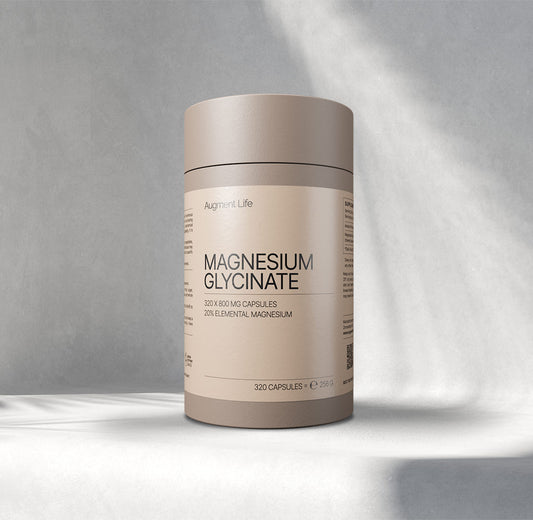
Magnesium Glycinate: 800 mg of magnesium glycinate, providing 160 mg of elemental magnesium per capsule.
If you take medication, check with your doctor or pharmacist first.
Read More
Literature Sources
- Greendale GA, Sternfeld B, Huang M, Han W, Karvonen-Gutierrez C, Ruppert K, et al. Changes in body composition and weight during the menopause transition. JCI Insight. 2019;4(5):e124865. https://doi.org/10.1172/jci.insight.124865
- Davis SR, Castelo-Branco C, Chedraui P, Lumsden MA, Nappi RE, Shah D, et al. Understanding weight gain at menopause. Climacteric. 2012;15(5):419-429. https://doi.org/10.3109/13697137.2012.707385
- Mauvais-Jarvis F, Clegg DJ, Hevener AL. The role of estrogens in control of energy balance and glucose homeostasis. Endocrine Reviews. 2013;34(3):309-338. https://doi.org/10.1210/er.2012-1055
- Grant LK, Coborn JE, Cohn A, Nathan MD, Scheer FAJL, Klerman EB, et al. Sleep fragmentation and estradiol suppression decrease fat oxidation in premenopausal women. Journal of Clinical Endocrinology and Metabolism. 2022;107(8):e3167-e3176. https://doi.org/10.1210/clinem/dgac313
- Appelhans BM, Janssen I, Cursio JF, Matthews KA, Hall M, Gold EB, et al. Sleep duration and weight change in midlife women: the SWAN Sleep Study. Obesity. 2013;21(1):77-84. https://doi.org/10.1002/oby.20251
- Fialho SN, de Souza Ferreira ML, Ribeiro SAV, Kravchychyn ACP, Hermsdorff HHM. Dietary intake of animal and plant-based protein on adiposity measurements and body composition in pre- and postmenopausal women: a systematic review of randomized clinical trials. The FASEB Journal. 2026;40(15):e71977. https://doi.org/10.1096/fj.202600792R
- EFSA Panel on Dietetic Products, Nutrition and Allergies (NDA). Scientific opinion on dietary reference values for protein. EFSA Journal. 2012;10(2):2557. https://doi.org/10.2903/j.efsa.2012.2557
- Bauer J, Biolo G, Cederholm T, Cesari M, Cruz-Jentoft AJ, Morley JE, et al. Evidence-based recommendations for optimal dietary protein intake in older people: a position paper from the PROT-AGE Study Group. Journal of the American Medical Directors Association. 2013;14(8):542-559. https://doi.org/10.1016/j.jamda.2013.05.021
- Khalafi M, Habibi Maleki A, Sakhaei MH, Rosenkranz SK, Pourvaghar MJ, Ehsanifar M, et al. The effects of exercise training on body composition in postmenopausal women: a systematic review and meta-analysis. Frontiers in Endocrinology. 2023;14:1183765. https://doi.org/10.3389/fendo.2023.1183765
- Bull FC, Al-Ansari SS, Biddle S, Borodulin K, Buman MP, Cardon G, et al. World Health Organization 2020 guidelines on physical activity and sedentary behaviour. British Journal of Sports Medicine. 2020;54(24):1451-1462. https://doi.org/10.1136/bjsports-2020-102955
- Cook KL, Giles ED, Sekela JJ, Simpson JB, Redinbo MR, Wilson AS, et al. Weight loss and omega-3 supplementation modulate the microbiome in women with increased breast cancer risk. Cancer Prevention Research. 2026;19(8):473-488. https://doi.org/10.1158/1940-6207.CAPR-26-0021
- Younglove C. Clinical review: Menopause hormone therapy in weight management. Obesity Pillars. 2026;18:100258. https://doi.org/10.1016/j.obpill.2026.100258
- Li T, Jiang NS, Kaskey J, Schnatz PF, Nudy M. Hormone therapy and insulin resistance in non-diabetic postmenopausal women: a systematic review and meta-analysis. Climacteric. 2025;28(6):673-681. https://doi.org/10.1080/13697137.2025.2509844
- Javed AA, Mayhew AJ, Shea AK, Raina P. Association between hormone therapy and muscle mass in postmenopausal women: a systematic review and meta-analysis. JAMA Network Open. 2019;2(8):e1910154. https://doi.org/10.1001/jamanetworkopen.2019.10154
- Yousefi-Nodeh H, Farshbaf-Khalili A, Sadeghzadeh Oskouei B, Jafarilar-Aghdam N, Kazemi-Zanjani N, Pourzeinali S. Curcumin and vitamin E improve hot flashes, lipid profile, and fasting blood glucose without any detrimental effect on the liver and renal function in postmenopausal women: a triple-blind placebo-controlled clinical trial. Health Care for Women International. 2024;45(11):1184-1206. https://doi.org/10.1080/07399332.2022.2117815
- Akyakar B, Şahin İN, Ağagündüz D, Szép D, Budán F. The effect of curcumin on postmenopausal symptoms: a systematic review based on randomized controlled trials. International Journal of Molecular Sciences. 2025;26(17):8260. https://doi.org/10.3390/ijms26178260
- Félix-Soriano E, Martínez-Gayo A, Cobo MJ, Pérez-Chávez A, Ibáñez-Santos J, Palacios Samper N, et al. Effects of DHA-rich n-3 fatty acid supplementation and/or resistance training on body composition and cardiometabolic biomarkers in overweight and obese post-menopausal women. Nutrients. 2021;13(7):2465. https://doi.org/10.3390/nu13072465
- Zhang YY, Liu W, Zhao TY, Tian HM. Efficacy of omega-3 polyunsaturated fatty acids supplementation in managing overweight and obesity: a meta-analysis of randomized clinical trials. The Journal of Nutrition, Health and Aging. 2017;21(2):187-192. https://doi.org/10.1007/s12603-016-0755-5
- Simental-Mendía LE, Sahebkar A, Rodríguez-Morán M, Guerrero-Romero F. A systematic review and meta-analysis of randomized controlled trials on the effects of magnesium supplementation on insulin sensitivity and glucose control. Pharmacological Research. 2016;111:272-282. https://doi.org/10.1016/j.phrs.2016.06.019
- Rafiee M, Ghavami A, Rashidian A, Hadi A, Askari G. The effect of magnesium supplementation on anthropometric indices: a systematic review and dose-response meta-analysis of clinical trials. British Journal of Nutrition. 2021;125(6):644-656. https://doi.org/10.1017/S0007114520003037
- Abbasi B, Kimiagar M, Sadeghniiat K, Shirazi MM, Hedayati M, Rashidkhani B. The effect of magnesium supplementation on primary insomnia in elderly: a double-blind placebo-controlled clinical trial. Journal of Research in Medical Sciences. 2012;17(12):1161-1169. https://pubmed.ncbi.nlm.nih.gov/23853635/
- Mah J, Pitre T. Oral magnesium supplementation for insomnia in older adults: a systematic review and meta-analysis. BMC Complementary Medicine and Therapies. 2021;21:125. https://doi.org/10.1186/s12906-021-03297-z