At some point, many people notice their sleep isn't what it used to be. The night feels more broken, and a glass of wine or a busy week seems to linger into the next morning in a way it never did.
In How Much Deep Sleep and REM Sleep Do You Need? we found that adults need 7 hours or more a night (1), and that waking often and getting less rapid eye movement (REM) sleep were both linked to poorer sleep quality (2).
So what breaks up a night's sleep, and which changes are actually worth making? Here is what the research suggests, from the moment you wake up to the moment you go to bed.
Why Does Your Wake Time Matter?
One of the simplest changes is getting up at roughly the same time every day, weekends included. Stanford neuroscientist Dr Andrew Huberman makes a consistent wake time the anchor of his Sleep Toolkit, and suggests sleeping in no more than about an hour later at weekends (3).
A regular routine may matter for long-term health too. People with the most irregular sleep times have been found to have a higher risk of early death than those with regular ones, and regularity was a stronger predictor than how long people slept (4).
What Should You Do in the Morning to Sleep Better?
Light is the main signal that sets your body clock. Huberman recommends getting bright outdoor light within 30 to 60 minutes of waking (3), and a 2022 consensus of light and sleep researchers recommends bright light during the day (5).
If you tend to wake up groggy, red light may help. Red light through closed eyelids, or from goggles worn after waking, has reduced grogginess on some tasks after a short sleep (6).
What Helps During the Day?
Moving more during the day appears to help. Exercise improves sleep both after a single session and as a regular habit, and regular exercise moderately improves how well people rate their sleep (7). Evening exercise is fine for most people, unless it is vigorous exercise that ends within an hour of bedtime (8).
Caffeine lasts longer than most people expect: a large dose taken 6 hours before bed can still cut sleep by more than an hour (9). How long it lasts varies. The average adult takes about 5 hours to clear half of it, but this is faster in smokers and can be much slower in pregnancy, with liver disease or with some medications (10). Common gene variations also affect how fast you break it down and how strongly it disrupts your sleep (11, 12). Huberman suggests stopping by around 2 or 3 pm (3), or earlier if you are sensitive to caffeine.
How Should You Wind Down in the Evening?
The same light consensus recommends dimming the lights for the last few hours before bed (5), and that includes screens. Reading on an iPad for 4 hours before bed instead of a printed book can mean taking about 10 minutes longer to fall asleep, less REM sleep and feeling less alert the next morning (13).
Red light therapy is often promoted for sleep, but the evidence is early. A red light cap improved insomnia scores in nurses working shifts, though there was no placebo device to compare it with (14). And darkness may still beat red light before bed: healthy adults slept less after an hour of red light in the evening than after an hour in the dark (15).
Alcohol helps you fall asleep, but only at first. It adds deep sleep early in the night, but sleep becomes more broken in the second half (16). Even small amounts delay the first REM period, and at moderate to high doses total REM sleep falls. We look at why that matters for recovery in Deep Sleep or REM: Which Matters More for Recovery?
What you eat may play a part too. Early research links a diet higher in fibre and lower in saturated fat and sugar to deeper sleep and fewer awakenings (17).
A warm shower or bath can also help. Your core body temperature needs to fall slightly for you to fall asleep, and warming your skin speeds up cooling afterwards. A bath in water of 40 to 42.5°C 1 to 2 hours before bed has been found to help people fall asleep faster, even when it lasted only about 10 minutes (18).
What Helps Once You Are in Bed?
Huberman recommends a cool, dark bedroom (3). An eye mask may help if you can't make the room fully dark. Young adults who slept with one for a week had better memory scores and felt more alert than after a week without (19).
If your mind is busy at bedtime, writing a short to-do list for the next day may help you fall asleep faster (20). If you have been awake for around 20 minutes, getting up and doing something calm in dim light until you feel sleepy is part of cognitive behavioural therapy for insomnia (CBT-I). The American Academy of Sleep Medicine strongly recommends CBT-I for long-term insomnia (21), and it is best done with a trained therapist or a structured programme. Relaxation practices such as progressive muscle relaxation, where you tense and release each muscle group in turn, or non-sleep deep rest (NSDR) may also help you wind down.
Loud snoring, gasping at night or daytime sleepiness despite enough time in bed can point to sleep apnoea, and are worth raising with your doctor.
Which Supplements Help With Sleep?
The effects of sleep supplements are modest. Of the herbal and amino acid options, ashwagandha has the most research behind it, with smaller studies for magnesium and L-theanine.
Ashwagandha led to a small improvement in sleep across 5 trials, especially in people with insomnia who took it for 8 weeks or more (22). L-theanine, an amino acid found in tea, helped people feel that they fell asleep faster (23). The evidence for GABA is limited (24).
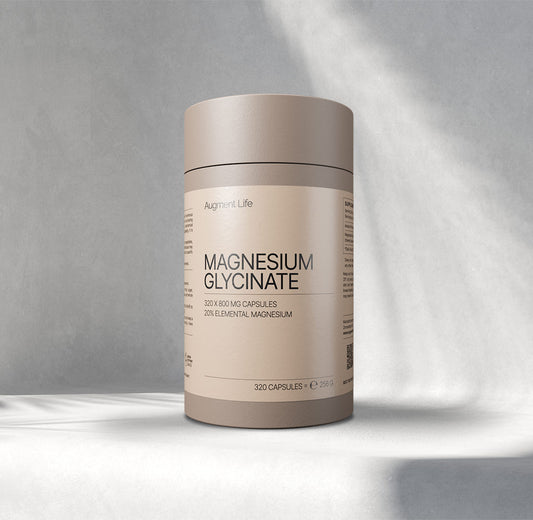
Magnesium helped older adults fall asleep about 17 minutes faster, though it did not add to their total sleep (25). More recent trials suggest that both magnesium glycinate and magnesium threonate may improve how well people rate their sleep, compared with a placebo (26, 27).
The Takeaway
The changes with the most evidence behind them cost nothing: a steady wake time, daylight in the morning, regular exercise, and less caffeine and alcohol later in the day. If you change only one thing this week, make it your wake time, as the rest of your routine builds on it. Supplements may help a little on top of these habits, but not in place of them. If poor sleep lasts several weeks, see your doctor.
Read More
Literature Sources
- Watson NF, Badr MS, Belenky G, Bliwise DL, Buxton OM, Buysse D, et al. Recommended Amount of Sleep for a Healthy Adult: A Joint Consensus Statement of the American Academy of Sleep Medicine and Sleep Research Society. Sleep. 2015;38(6):843-844. https://doi.org/10.5665/sleep.4716
- della Monica C, Johnsen S, Atzori G, Groeger JA, Dijk DJ. Rapid Eye Movement Sleep, Sleep Continuity and Slow Wave Sleep as Predictors of Cognition, Mood, and Subjective Sleep Quality in Healthy Men and Women, Aged 20-84 Years. Frontiers in Psychiatry. 2018;9:255. https://doi.org/10.3389/fpsyt.2018.00255
- Huberman A. Sleep Toolkit: Tools for Optimizing Sleep & Sleep-Wake Timing. Huberman Lab podcast, episode 84. 2022. https://www.hubermanlab.com/episode/sleep-toolkit-tools-for-optimizing-sleep-and-sleep-wake-timing
- Windred DP, Burns AC, Lane JM, Saxena R, Rutter MK, Cain SW, Phillips AJK. Sleep regularity is a stronger predictor of mortality risk than sleep duration: a prospective cohort study. Sleep. 2024;47(1):zsad253. https://doi.org/10.1093/sleep/zsad253
- Brown TM, Brainard GC, Cajochen C, Czeisler CA, Hanifin JP, Lockley SW, et al. Recommendations for daytime, evening, and nighttime indoor light exposure to best support physiology, sleep, and wakefulness in healthy adults. PLoS Biology. 2022;20(3):e3001571. https://doi.org/10.1371/journal.pbio.3001571
- Figueiro MG, Sahin L, Roohan C, Kalsher M, Plitnick B, Rea MS. Effects of red light on sleep inertia. Nature and Science of Sleep. 2019;11:45-57. https://doi.org/10.2147/NSS.S195563
- Kredlow MA, Capozzoli MC, Hearon BA, Calkins AW, Otto MW. The effects of physical activity on sleep: a meta-analytic review. Journal of Behavioral Medicine. 2015;38(3):427-449. https://doi.org/10.1007/s10865-015-9617-6
- Stutz J, Eiholzer R, Spengler CM. Effects of Evening Exercise on Sleep in Healthy Participants: A Systematic Review and Meta-Analysis. Sports Medicine. 2019;49(2):269-287. https://doi.org/10.1007/s40279-018-1015-0
- Drake C, Roehrs T, Shambroom J, Roth T. Caffeine effects on sleep taken 0, 3, or 6 hours before going to bed. Journal of Clinical Sleep Medicine. 2013;9(11):1195-1200. https://doi.org/10.5664/jcsm.3170
- Evans J, Richards JR, Battisti AS. Caffeine. StatPearls. Treasure Island (FL): StatPearls Publishing; 2024. https://www.ncbi.nlm.nih.gov/books/NBK519490/
- Nehlig A. Interindividual Differences in Caffeine Metabolism and Factors Driving Caffeine Consumption. Pharmacological Reviews. 2018;70(2):384-411. https://doi.org/10.1124/pr.117.014407
- Rétey JV, Adam M, Khatami R, Luhmann UF, Jung HH, Berger W, Landolt HP. A genetic variation in the adenosine A2A receptor gene (ADORA2A) contributes to individual sensitivity to caffeine effects on sleep. Clinical Pharmacology and Therapeutics. 2007;81(5):692-698. https://doi.org/10.1038/sj.clpt.6100102
- Chang AM, Aeschbach D, Duffy JF, Czeisler CA. Evening use of light-emitting eReaders negatively affects sleep, circadian timing, and next-morning alertness. Proceedings of the National Academy of Sciences. 2015;112(4):1232-1237. https://doi.org/10.1073/pnas.1418490112
- Liao YH, Tai CJ, Ming JL, Lin LH, Chien LY. The Effectiveness of Low-Level LED Light Therapy for Sleep Problems, Psychological Symptoms, and Heart Rate Variability in Shift-Work Nurses: A Randomized Controlled Trial. Journal of Nursing Management. 2025;2025:6478834. https://doi.org/10.1155/jonm/6478834
- Pan R, Zhang G, Deng F, Lin W, Pan J. Effects of red light on sleep and mood in healthy subjects and individuals with insomnia disorder. Frontiers in Psychiatry. 2023;14:1200350. https://doi.org/10.3389/fpsyt.2023.1200350
- Ebrahim IO, Shapiro CM, Williams AJ, Fenwick PB. Alcohol and sleep I: effects on normal sleep. Alcoholism: Clinical and Experimental Research. 2013;37(4):539-549. https://doi.org/10.1111/acer.12006
- St-Onge MP, Roberts A, Shechter A, Choudhury AR. Fiber and saturated fat are associated with sleep arousals and slow wave sleep. Journal of Clinical Sleep Medicine. 2016;12(1):19-24. https://doi.org/10.5664/jcsm.5384
- Haghayegh S, Khoshnevis S, Smolensky MH, Diller KR, Castriotta RJ. Before-bedtime passive body heating by warm shower or bath to improve sleep: a systematic review and meta-analysis. Sleep Medicine Reviews. 2019;46:124-135. https://doi.org/10.1016/j.smrv.2019.04.008
- Greco V, Bergamo D, Cuoccio P, Konkoly KR, Muñoz Lombardo K, Lewis PA. Wearing an eye mask during overnight sleep improves episodic learning and alertness. Sleep. 2023;46(3):zsac305. https://doi.org/10.1093/sleep/zsac305
- Scullin MK, Krueger ML, Ballard HK, Pruett N, Bliwise DL. The effects of bedtime writing on difficulty falling asleep: A polysomnographic study comparing to-do lists and completed activity lists. Journal of Experimental Psychology: General. 2018;147(1):139-146. https://doi.org/10.1037/xge0000374
- Edinger JD, Arnedt JT, Bertisch SM, Carney CE, Harrington JJ, Lichstein KL, et al. Behavioral and psychological treatments for chronic insomnia disorder in adults: an American Academy of Sleep Medicine clinical practice guideline. Journal of Clinical Sleep Medicine. 2021;17(2):255-262. https://doi.org/10.5664/jcsm.8986
- Cheah KL, Norhayati MN, Husniati Yaacob L, Abdul Rahman R. Effect of Ashwagandha (Withania somnifera) extract on sleep: a systematic review and meta-analysis. PLoS One. 2021;16(9):e0257843. https://doi.org/10.1371/journal.pone.0257843
- Hidese S, Ogawa S, Ota M, Ishida I, Yasukawa Z, Ozeki M, et al. Effects of L-theanine administration on stress-related symptoms and cognitive functions in healthy adults: a randomized controlled trial. Nutrients. 2019;11(10):2362. https://doi.org/10.3390/nu11102362
- Hepsomali P, Groeger JA, Nishihira J, Scholey A. Effects of oral gamma-aminobutyric acid (GABA) administration on stress and sleep in humans: a systematic review. Frontiers in Neuroscience. 2020;14:923. https://doi.org/10.3389/fnins.2020.00923
- Mah J, Pitre T. Oral magnesium supplementation for insomnia in older adults: a systematic review & meta-analysis. BMC Complementary Medicine and Therapies. 2021;21(1):125. https://doi.org/10.1186/s12906-021-03297-z
- Schuster J, Cycelskij I, Lopresti A, Hahn A. Magnesium Bisglycinate Supplementation in Healthy Adults Reporting Poor Sleep: A Randomized, Placebo-Controlled Trial. Nature and Science of Sleep. 2025;17:2027-2040. https://doi.org/10.2147/NSS.S524348
- Hausenblas HA, Lynch T, Hooper S, Shrestha A, Rosendale D, Gu J. Magnesium-L-threonate improves sleep quality and daytime functioning in adults with self-reported sleep problems: A randomized controlled trial. Sleep Medicine: X. 2024;8:100121. https://doi.org/10.1016/j.sleepx.2024.100121