Shopping bags feel heavier than they used to. Getting up from a low sofa takes a push from the armrest, and a long flight of stairs is something you now plan for.
Much of it comes down to muscle. From midlife the body slowly loses muscle tissue, and the strength that comes with it fades even faster. When both drop low enough to hold you back, it is known as sarcopenia. So why does muscle fade with age, and how can you hold on to it?
What Is Sarcopenia?
Sarcopenia is low muscle mass and strength that leads to weaker physical performance, according to the first globally agreed description of the condition, published in 2024 (1). Somewhere between 1 and 4 in 10 older adults living at home may have it, depending on the definition used, with the most common definitions putting it at around 1 in 8 (2).
Muscle fades for several reasons, including ageing itself, moving less, eating too little and long-term illness (3). Strength fades faster than size. At around 75, people lose roughly 0.6% to 1% of their muscle mass each year but 2.5% to 4% of their strength, and it is the loss of strength that makes everyday tasks harder (4).
Early signs include a weaker grip, needing your arms to get up from a chair and a slower walking pace, all of which a doctor can check (3).
Why Do Older Adults Need More Protein?
Eating protein is one of the main triggers for muscle to repair and rebuild. With age, muscle responds less to it, so we need more protein to get the same effect. This is known as anabolic resistance (5).
A group of experts brought together by Europe's geriatric medicine society advises people over 65 to eat at least 1.0 to 1.2 g of protein per kilogram of body weight a day, and 1.2 g or more if they exercise, compared with the 0.8 g usually advised for adults (5). For someone weighing 75 kg, that is about 75 to 90 g a day. The same group suggests 25 to 30 g per meal (5), so spreading protein through the day may suit ageing muscle better than saving most of it for dinner. That could be a 3-egg omelette with cheese, 200 g of Greek yoghurt with nuts and seeds, or a tofu and edamame stir-fry.
Is It Too Late to Start Strength Training?
It is not too late. Starting strength training around retirement age can still help you keep your strength. In a Danish trial, 451 newly retired people in their mid to late 60s did a year of heavy weight training, lighter circuit training or no training. Four years after the study began, the heavy-training group's leg strength was still where it started, while the group that did no training had lost strength (6). Other measures, such as grip strength, declined in all three groups.
Start sooner if you can. Older adults need more training than younger people to keep the muscle they build, although their strength tends to hold up well (7). For women, menopause adds another challenge, as lean mass begins to fall when the menopause transition gets under way and keeps falling until about 2 years after the final period (8). Putting these habits in place in your 40s or earlier means you go into those years with more muscle to protect.
Can Leucine and Creatine Help Preserve Muscle?
Leucine
Leucine is the amino acid that does most to switch on muscle building after a meal. In older adults with sarcopenia, leucine-enriched whey with vitamin D added a little muscle over 13 weeks and made standing up from a chair easier, though grip strength improved no more than with a placebo drink (9). Across studies the gains have been small and the evidence is of low quality (10), and leucine taken on its own has shown little effect (11). If you use it, it makes most sense alongside protein rather than in place of it. More in How Much Leucine Should I Take? and Leucine vs. Autophagy.
Creatine
Creatine has the more consistent evidence of the two, provided it is combined with strength training. Older adults who took it while lifting weights gained about 1.3 kg more lean tissue, which includes some water, than those who trained without it (12). In women after menopause the gains in lean tissue and leg strength were smaller and seen at 5 g a day or more alongside regular training, with no change in bone density (13). See How Much Creatine Do I Need? and How to Choose the Right Type of Creatine.
Anyone taking medication or with a health condition should check with their doctor or pharmacist before starting supplements, eating more protein or starting a new exercise programme.
The Takeaway
The earlier you build muscle, the more you have to draw on later in life, but it is never too late to add to it.
- Aim for at least 1.0 to 1.2 g of protein per kilogram of body weight a day, or 1.2 g or more if you strength train, spread across your meals (5).
- Strength train at least 2 days a week, with weights or bands heavy enough that the last few repetitions feel hard (14).
- From 65, train 3 days a week and include balance work (14).
- Once these habits are in place, creatine has the stronger evidence of the two supplements.
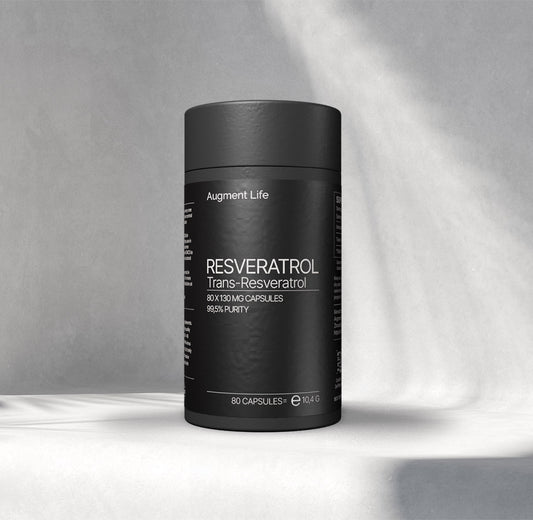
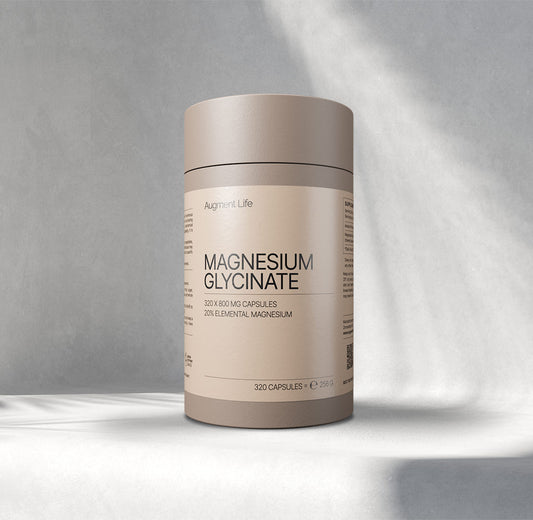
Augment Life offers two supplements covered in this article:
This article is for general information and is not medical advice.
Read More
Literature Sources
- Kirk B, Cawthon PM, Arai H, Ávila-Funes JA, Barazzoni R, Bhasin S, et al. The conceptual definition of sarcopenia: Delphi consensus from the Global Leadership Initiative in Sarcopenia (GLIS). Age Ageing. 2024;53(3):afae052. https://doi.org/10.1093/ageing/afae052
- Mayhew AJ, Amog K, Phillips S, Parise G, McNicholas PD, de Souza RJ, et al. The prevalence of sarcopenia in community-dwelling older adults, an exploration of differences between studies and within definitions: a systematic review and meta-analyses. Age Ageing. 2019;48(1):48-56. https://doi.org/10.1093/ageing/afy106
- Cruz-Jentoft AJ, Bahat G, Bauer J, Boirie Y, Bruyère O, Cederholm T, et al. Sarcopenia: revised European consensus on definition and diagnosis. Age Ageing. 2019;48(1):16-31. https://doi.org/10.1093/ageing/afy169
- Mitchell WK, Williams J, Atherton P, Larvin M, Lund J, Narici M. Sarcopenia, dynapenia, and the impact of advancing age on human skeletal muscle size and strength; a quantitative review. Front Physiol. 2012;3:260. https://doi.org/10.3389/fphys.2012.00260
- Bauer J, Biolo G, Cederholm T, Cesari M, Cruz-Jentoft AJ, Morley JE, et al. Evidence-based recommendations for optimal dietary protein intake in older people: a position paper from the PROT-AGE Study Group. J Am Med Dir Assoc. 2013;14(8):542-59. https://doi.org/10.1016/j.jamda.2013.05.021
- Bloch-Ibenfeldt M, Theil Gates A, Karlog K, Demnitz N, Kjaer M, Boraxbekk CJ. Heavy resistance training at retirement age induces 4-year lasting beneficial effects in muscle strength: a long-term follow-up of an RCT. BMJ Open Sport Exerc Med. 2024;10(2):e001899. https://doi.org/10.1136/bmjsem-2024-001899
- Bickel CS, Cross JM, Bamman MM. Exercise dosing to retain resistance training adaptations in young and older adults. Med Sci Sports Exerc. 2011;43(7):1177-87. https://doi.org/10.1249/MSS.0b013e318207c15d
- Greendale GA, Sternfeld B, Huang M, Han W, Karvonen-Gutierrez C, Ruppert K, et al. Changes in body composition and weight during the menopause transition. JCI Insight. 2019;4(5):e124865. https://doi.org/10.1172/jci.insight.124865
- Bauer JM, Verlaan S, Bautmans I, Brandt K, Donini LM, Maggio M, et al. Effects of a vitamin D and leucine-enriched whey protein nutritional supplement on measures of sarcopenia in older adults, the PROVIDE study: a randomized, double-blind, placebo-controlled trial. J Am Med Dir Assoc. 2015;16(9):740-7. https://doi.org/10.1016/j.jamda.2015.05.021
- Huang C, Hsieh MH. Effects of leucine supplementation in older adults with sarcopenia: a meta-analysis. Nutrients. 2025;17(15):2413. https://doi.org/10.3390/nu17152413
- Guo Y, Fu X, Hu Q, Chen L, Zuo H. The effect of leucine supplementation on sarcopenia-related measures in older adults: a systematic review and meta-analysis of 17 randomized controlled trials. Front Nutr. 2022;9:929891. https://doi.org/10.3389/fnut.2022.929891
- Forbes SC, Candow DG, Ostojic SM, Roberts MD, Chilibeck PD. Meta-analysis examining the importance of creatine ingestion strategies on lean tissue mass and strength in older adults. Nutrients. 2021;13(6):1912. https://doi.org/10.3390/nu13061912
- Naddafha S, Antonio J, Kreider RB, Stout JR. Creatine monohydrate for lean mass, strength, and bone density in postmenopausal women: a systematic review and meta-analysis. J Int Soc Sports Nutr. 2026;23(1):2668435. https://doi.org/10.1080/15502783.2026.2668435
- Bull FC, Al-Ansari SS, Biddle S, Borodulin K, Buman MP, Cardon G, et al. World Health Organization 2020 guidelines on physical activity and sedentary behaviour. Br J Sports Med. 2020;54(24):1451-62. https://doi.org/10.1136/bjsports-2020-102955