Διατροφικές οδηγίες, συμπληρώματα και καθημερινές συνήθειες για τη θωράκιση του οργανισμού κατά τη θεραπεία GLP-1
Τα φάρμακα GLP-1, όπως η σεμαγλουτίδη και η τιρζεπατίδη, έχουν επαναπροσδιορίσει τον τρόπο με τον οποίο πολλοί άνθρωποι προσεγγίζουν τη διαχείριση του βάρους. Ρυθμίζοντας την όρεξη και το σάκχαρο στο αίμα, μπορούν να ενισχύσουν την ουσιαστική απώλεια βάρους και να βελτιώσουν τους δείκτες της μεταβολικής υγείας.
Ωστόσο, η απώλεια βάρους δεν αφορά μόνο την απώλεια σωματικού λίπους.
Όταν η όρεξη μειώνεται, συχνά μειώνεται και η πρόσληψη τροφής. Το να τρώει κανείς λιγότερο μπορεί να σημαίνει λιγότερες θερμίδες, αλλά μπορεί επίσης να σημαίνει και χαμηλότερη πρόσληψη των θρεπτικών συστατικών από τα οποία εξαρτάται ο οργανισμός. Αν αυτό δεν αντιμετωπιστεί, ενδέχεται να επηρεάσει τους μύες, την πέψη, την ενέργεια και τα μακροπρόθεσμα αποτελέσματα για την υγεία (1).
Εδώ ακριβώς έρχονται να βοηθήσουν η διατροφή, ο τρόπος ζωής και η στοχευμένη λήψη συμπληρωμάτων.
Τι είναι τα φάρμακα GLP-1;
Το GLP-1 σημαίνει γλυκαγονοειδές πεπτίδιο-1, μια ορμόνη που εκκρίνεται φυσικά στο έντερο μετά το φαγητό. Βοηθά στη ρύθμιση του σακχάρου στο αίμα, επιβραδύνει τη γαστρική κένωση και στέλνει σήμα κορεσμού στον εγκέφαλο. Τα φάρμακα που ανήκουν στους αγωνιστές των υποδοχέων GLP-1 μιμούνται αυτή την ορμόνη για να παράγουν παρόμοια αποτελέσματα σε πολύ μεγαλύτερη ένταση και διάρκεια.
Η σεμαγλουτίδη λειτουργεί κυρίως μέσω του μονοπατιού GLP-1. Η τιρζεπατίδη ενεργοποιεί τόσο τους υποδοχείς GLP-1 όσο και τους υποδοχείς GIP.
Το GIP (εξαρτώμενο από τη γλυκόζη ινσουλινοτρόπο πολυπεπτίδιο) είναι μια άλλη ορμόνη του εντέρου που εμπλέκεται στη ρύθμιση της όρεξης, την έκκριση ινσουλίνης και τον μεταβολισμό της ενέργειας. Η ενεργοποίηση και των δύο μονοπατιών φαίνεται να δημιουργεί ένα ισχυρότερο μεταβολικό σήμα από τη στόχευση μόνο του GLP-1 (2)..
Οι κλινικές δοκιμές δείχνουν μέση μείωση του σωματικού βάρους περίπου κατά 15% μετά από 68 εβδομάδες (3).
Η ζυγαριά δεν δείχνει τι είδους βάρος χάνεται. Παράλληλα με το λίπος, ορισμένοι άνθρωποι χάνουν επίσης άλιπη μάζα, η οποία είναι καθοριστική για τη δύναμη, τον μεταβολισμό, την κινητικότητα και τη μακροπρόθεσμη υγεία (1,3).
Προκαλούν τα φάρμακα GLP-1 ελλείψεις σε βιταμίνες και μέταλλα;
Τα φάρμακα GLP-1 δεν εξαντλούν άμεσα τα θρεπτικά συστατικά. Η ανησυχία είναι ότι όταν τρώτε λιγότερο φαγητό, προσλαμβάνετε και λιγότερα θρεπτικά συστατικά.
Ορισμένοι άνθρωποι εμφανίζουν επίσης ναυτία, εμετό, δυσκοιλιότητα, διάρροια ή αποστροφή προς το φαγητό, γεγονός που μπορεί να δυσκολέψει τη σταθερή και σωστή διατροφή (3). Μια συγχρονική μελέτη σε χρήστες φαρμάκων GLP-1 διαπίστωσε ότι η πραγματική διατροφική πρόσληψη υπολειπόταν των συστάσεων για πρωτεΐνη, φυτικές ίνες και αρκετά βασικά μικροθρεπτικά συστατικά (1,4).
Δεν θα εμφανίσουν όλοι όσοι λαμβάνουν φάρμακα GLP-1 κάποια έλλειψη. Ωστόσο, η διατροφή θα πρέπει να παρακολουθείται πιο προσεκτικά, ειδικά εάν η όρεξη είναι πολύ μειωμένη, η απώλεια βάρους είναι ραγδαία ή τα γεύματα γίνονται επαναλαμβανόμενα. Οι εξετάσεις αίματος και η καθοδήγηση από έναν επαγγελματία υγείας παραμένουν οι πιο αξιόπιστοι τρόποι για τον εντοπισμό πραγματικών ελλείψεων.
Γιατί έχει σημασία η διατήρηση των μυών
Η απώλεια σωματικού λίπους μπορεί να βελτιώσει τη μεταβολική υγεία, αλλά η υπερβολική απώλεια μυϊκής μάζας μπορεί να λειτουργήσει αρνητικά στα μακροπρόθεσμα αποτελέσματα.
Οι μύες υποστηρίζουν τη δύναμη, την κινητικότητα, τη ρύθμιση της γλυκόζης, την ενεργειακή δαπάνη σε ηρεμία και την υγιή γήρανση. Οι έρευνες δείχνουν ότι η άλιπη μάζα μπορεί να αντιπροσωπεύει ένα σημαντικό ποσοστό του συνολικού βάρους που χάνεται κατά τη διάρκεια της θεραπείας GLP-1 (1,3). Αυτός είναι ο λόγος για τον οποίο πολλοί ειδικοί συνιστούν τον συνδυασμό της θεραπείας GLP-1 με δομημένη διατροφή και προπόνηση με αντιστάσεις.
Τα θεμέλια: Τι μετράει περισσότερο
Πριν από τα συμπληρώματα, η βάση πρέπει να είναι το φαγητό, η κίνηση, η ενυδάτωση και η αποκατάσταση.
Δώστε προτεραιότητα στην πρωτεΐνη
Η πρωτεΐνη αποτελεί τον πιο σημαντικό διατροφικό στόχο κατά την απώλεια βάρους με την υποστήριξη φαρμάκων GLP-1. Η καταστολή της όρεξης μπορεί να δυσκολέψει την επαρκή πρόσληψη, και η παρατηρούμενη πρόσληψη πρωτεΐνης μεταξύ των χρηστών GLP-1 συχνά υπολείπεται των συνιστώμενων στόχων (4).
Ένας πρακτικός στόχος για πολλούς ενήλικες είναι περίπου 1,2-2,0 γραμμάρια πρωτεΐνης ανά κιλό σωματικού βάρους την ημέρα, ανάλογα με τη σύσταση του σώματος, το επίπεδο δραστηριότητας, την ηλικία και το ιατρικό ιστορικό. Αυτό είναι υψηλότερο από τις οδηγίες για τον γενικό πληθυσμό, επειδή ο στόχος κατά την απώλεια βάρους δεν είναι μόνο η μείωση του βάρους, αλλά η διατήρηση της άλιπης μάζας (4,5).
Επειδή η όρεξη μπορεί να είναι μειωμένη, η πρόσληψη πρωτεΐνης είναι συχνά πιο εύκολο να διαχειριστεί όταν κατανέμεται κατά τη διάρκεια της ημέρας. Τα μικρά, πλούσια σε πρωτεΐνη γεύματα τείνουν να είναι πιο ανεκτά από τα μεγάλα. Καλές επιλογές περιλαμβάνουν τα αυγά, το ελληνικό γιαούρτι, το ψάρι, το κοτόπουλο, το τόφου, το τέμπε, τα όσπρια, το άπαχο κρέας και τις σκόνες πρωτεΐνης.
Προπόνηση με αντιστάσεις
Η προπόνηση με αντιστάσεις είναι ένας από τους πιο αποτελεσματικούς τρόπους για την προστασία των μυών κατά την απώλεια βάρους (1).
Δύο έως τέσσερις συνεδρίες την εβδομάδα με τη χρήση βαρών, λάστιχων αντίστασης, οργάνων γυμναστικής ή ασκήσεων με το βάρος του σώματος μπορούν να βοηθήσουν στη διατήρηση της δύναμης και της άλιπης μάζας. Η πιο σημαντική μεταβλητή είναι η προοδευτική πρόκληση με την πάροδο του χρόνου. Καθώς το σώμα αλλάζει, η προπόνηση θα πρέπει να συνεχίσει να δίνει στους μύες έναν λόγο για να παραμείνουν.
Βάλτε σε πρώτο πλάνο τις φυτικές ίνες και τα πολύχρωμα φυτικά τρόφιμα
Οι φυτικές ίνες υποστηρίζουν την πέψη, την ταχύτητα και ομαλότητα των κενώσεων, τον κορεσμό, την ισορροπία της χοληστερόλης και το μικροβίωμα του εντέρου. Αυτό είναι ιδιαίτερα σημαντικό επειδή η δυσκοιλιότητα και οι αλλαγές στις συνήθειες του εντέρου είναι συχνές κατά τη διάρκεια της θεραπείας GLP-1 (1,3).
Πολλές τροφές πλούσιες σε φυτικές ίνες παρέχουν επίσης αντιοξειδωτικά και πολυφαινόλες, φυτικές ενώσεις που συμβάλλουν στην κυτταρική υγεία, την υγιή γήρανση και τη φυσιολογική ισορροπία της φλεγμονής. Τα μούρα, τα πολύχρωμα λαχανικά, τα φασόλια, οι σπόροι τσία, ο λιναρόσπορος, τα δημητριακά ολικής άλεσης, τα βότανα, τα μπαχαρικά, το πράσινο τσάι και το κακάο αποτελούν καλές πηγές.
Η πρόσληψη των φυτικών ινών θα πρέπει να αυξάνεται σταδιακά και να συνδυάζεται με επαρκή ποσότητα υγρών, ώστε να αποφευχθεί η επιδείνωση του φουσκώματος ή της δυσκοιλιότητας.
Δώστε έμφαση στη σωστή ενυδάτωση
Η μειωμένη όρεξη συχνά σημαίνει και χαμηλότερη πρόσληψη υγρών. Η ενυδάτωση βοηθά στην πέψη, την ενέργεια, την απόδοση στην άσκηση και την ομαλότητα των κενώσεων.
Για άτομα που τρώνε πολύ λιγότερο, ιδρώνουν έντονα ή εμφανίζουν ναυτία ή εμετό, ίσως αξίζει να εξετάσουν τη λήψη ηλεκτρολυτών. Μια απλή επιλογή είναι η προσθήκη μιας μικρής πρέζας θαλασσινού αλατιού πλούσιου σε μέταλλα στο νερό, ώστε να αυξηθεί η πρόσληψη νατρίου και ιχνοστοιχείων χωρίς την επιβάρυνση της ζάχαρης που βρίσκεται σε πολλά έτοιμα ποτά ηλεκτρολυτών του εμπορίου.
Το Πακέτο Υποστήριξης GLP-1
Τα συμπληρώματα βοηθούν να καλύψουμε ό,τι λείπει, αλλά λειτουργούν καλύτερα αν έχουμε ήδη φροντίσει τα βασικά.
Μονοϋδρική Κρεατίνη
Στόχος: δύναμη, αθλητική απόδοση, ανάπτυξη άλιπης μάζας
Η κρεατίνη βοηθά το σώμα να παράγει γρήγορα ενέργεια στις έντονες προπονήσεις, ενώ παράλληλα συμβάλλει στη διατήρηση ή την αύξηση της καθαρής μυϊκής μάζας αν κάνετε βάρη (6,7).
Για τα άτομα που λαμβάνουν φάρμακα GLP-1, η αξία της έγκειται στο ότι κάνει την προπόνηση με αντιστάσεις πιο αποτελεσματική και ενισχύει τη μυϊκή λειτουργία κατά τη διάρκεια της απώλειας βάρους. Μια τυπική ημερήσια δόση είναι 3-5 g μονοϋδρικής κρεατίνης (7).
Βιταμίνες D3 K2
Στόχος: υγεία οστών, θωράκιση ανοσοποιητικού, ενίσχυση μυών, αναπλήρωση ελλείψεων
Η έλλειψη βιταμίνης D είναι ήδη ένα συχνό φαινόμενο. Όταν όμως τρώμε λιγότερο λόγω της θεραπείας GLP-1, γίνεται ακόμα πιο δύσκολο να πάρουμε την ποσότητα που χρειαζόμαστε μόνο από το φαγητό μας (1).
Μια ημερήσια πρόσληψη 1.000-2.000 IU (25-50 μg) Βιταμίνης D3 είναι η συνηθισμένη δόση για να κρατάμε τη βιταμίνη D σε καλά επίπεδα, αν και οι ανάγκες του κάθε ανθρώπου είναι διαφορετικές (4,11). Η λήψη συμπληρωμάτων σε υψηλότερες δόσεις έχει μελετηθεί σε ορισμένους πληθυσμούς, συμπεριλαμβανομένων των ατόμων με παχυσαρκία ή μεταβολικό κίνδυνο, αλλά θα πρέπει να γίνεται με καθοδήγηση μέσω εξετάσεων αίματος και υπό την επίβλεψη επαγγελματία υγείας (1).
Σύμπλεγμα Βιταμινών Β
Στόχος: μεταβολισμός της ενέργειας, λειτουργία του νευρικού συστήματος και σχηματισμός των ερυθρών αιμοσφαιρίων
Επειδή οι βιταμίνες Β είναι υδατοδιαλυτές και αποθηκεύονται μόνο σε περιορισμένες ποσότητες, πρέπει να προσλαμβάνονται τακτικά μέσω της διατροφής. Κατά τη διάρκεια της θεραπείας με GLP-1, η καταστολή της όρεξης και η χαμηλότερη συνολική πρόσληψη τροφής μπορούν να μειώσουν την κατανάλωση αρκετών βασικών βιταμινών Β, αυξάνοντας τον κίνδυνο ανεπαρκούς πρόσληψης (1,11).
Η βιταμίνη Β12 βρίσκεται κυρίως σε τρόφιμα ζωικής προέλευσης, όπως το κρέας, το ψάρι, τα αυγά και τα γαλακτοκομικά. Όταν αυτά τα τρόφιμα καταναλώνονται λιγότερο συχνά, η πρόσληψη της Β12 μπορεί να μειωθεί. Η χαμηλή κατάσταση της Β12 στον οργανισμό μπορεί να αναπτυχθεί σταδιακά και, αν δεν αντιμετωπιστεί, μπορεί να συμβάλει σε κόπωση, μειωμένη συγκέντρωση και νευρολογικά συμπτώματα (12).
Το φυλλικό οξύ (βιταμίνη Β9) λειτουργεί μαζί με τη βιταμίνη Β12 στη σύνθεση του DNA και στον σχηματισμό των ερυθρών αιμοσφαιρίων. Οι κυριότερες διατροφικές πηγές περιλαμβάνουν τα πράσινα φυλλώδη λαχανικά και τα όσπρια.
Η θειαμίνη (βιταμίνη Β1) είναι ιδιαίτερα σημαντική κατά τη διάρκεια περιόδων χαμηλής πρόσληψης θερμίδων, επειδή τα αποθέματα του οργανισμού είναι σχετικά περιορισμένα. Πρόσφατες αναφορές περιστατικών έχουν περιγράψει σοβαρή έλλειψη θειαμίνης και σχετικές νευρολογικές επιπλοκές σε άτομα που χρησιμοποιούν σεμαγλουτίδη και τα οποία εμφάνισαν παρατεταμένη ναυτία, έμετο, ταχεία απώλεια βάρους ή έντονα μειωμένη διατροφική πρόσληψη για διάστημα εβδομάδων έως μηνών (13,14). Τα δημητριακά ολικής άλεσης και τα όσπρια συγκαταλέγονται στις κύριες διατροφικές πηγές.
Ένα υψηλής ποιότητας συμπλήρωμα συμπλέγματος Β συμβάλλει στη διατήρηση επαρκών επιπέδων θειαμίνης, φυλλικού οξέος, βιταμίνης Β12 και λοιπών βιταμινών Β, ιδίως σε καταστάσεις έντονης καταστολής της όρεξης και δραστικής μείωσης της διαιτητικής πρόσληψης.
Μαγνήσιο
Στόχος: μυϊκή ενδυνάμωση, βελτίωση ύπνου, κυτταρική ενυδάτωση, παραγωγή ενέργειας
Το μαγνήσιο είναι απαραίτητο για την παραγωγή ενέργειας, τη μυϊκή λειτουργία, τη ρύθμιση του νευρικού συστήματος και την ισορροπία των ηλεκτρολυτών (1). Πολλοί ενήλικες καταναλώνουν ήδη λιγότερο μαγνήσιο από το συνιστώμενο, και η μειωμένη πρόσληψη τροφής κατά τη διάρκεια της θεραπείας με GLP-1 μπορεί να αυξήσει αυτή την πιθανότητα (4,12)..
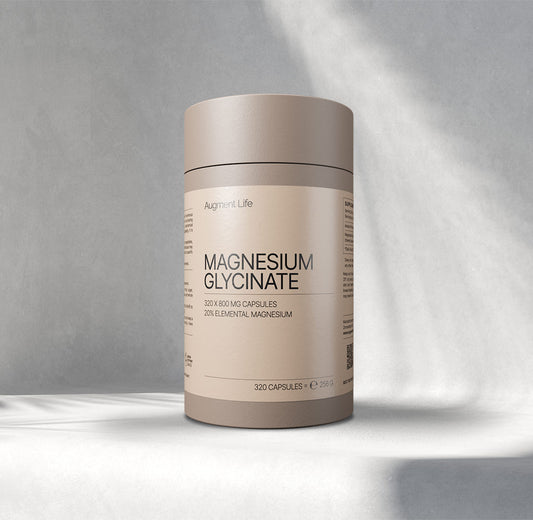
Το Μαγνήσιο 1-A-Day Mix παρέχει 375 mg μαγνησίου από πέντε μορφές υψηλής βιοδιαθεσιμότητας σε μία μόνο ημερήσια δόση. Όταν αναμειγνύεται με νερό, προσφέρει επίσης έναν πρακτικό τρόπο ενίσχυσης της ενυδάτωσης παράλληλα με την πρόσληψη μαγνησίου. Για ευρύτερη υποστήριξη των ηλεκτρολυτών, μπορεί να προστεθεί στο ίδιο ποτήρι μια μικρή πρέζα θαλασσινού αλατιού πλούσιου σε ιχνοστοιχεία.
Ωμέγα-3 Λιπαρά Οξέα
Στόχος: υγεία της καρδιάς, ποιότητα των μυών και μεταβολική υγεία
OΤα ωμέγα-3 λιπαρά οξέα, ιδιαίτερα το EPA και το DHA, διατηρούν την καρδιαγγειακή υγεία και ρύθμιση της φλεγμονώδους απόκρισης. Κατά τη διάρκεια της θεραπείας με GLP-1, ενδέχεται επίσης να είναι σημαντικά για την ποιότητα των μυών και την ευρύτερη καρδιομεταβολική υποστήριξη (1).
Τα άτομα που καταναλώνουν λίγα ή καθόλου λιπαρά ψάρια ενδέχεται να ωφεληθούν από τη λήψη συμπληρωμάτων. Ένας πρακτικός στόχος που χρησιμοποιείται συχνά για καρδιομεταβολική υποστήριξη είναι 1-2 γραμμάρια την ημέρα ενός συνδυασμένου συμπληρώματος ωμέγα-3 με EPA και DHA (1).
Προβιοτικά
Στόχος: ομαλή πέψη, υγιές μικροβίωμα, ισορροπία εντέρου
Έχει φανεί ότι τα προβιοτικά βοηθούν στη συχνότητα των κενώσεων και στην καλή υγεία του εντέρου σε κάποιους ανθρώπους, όμως η δράση τους εξαρτάται από το συγκεκριμένο στέλεχος, τη δόση και τον κάθε οργανισμό (10). Τα είδη που έχουν μελετηθεί περισσότερο είναι ο Λακτοβάκιλλος (Lactobacillus) και το Μπιφιδοβακτήριο (Bifidobacterium).
Πεπτίδια κολλαγόνου
Στόχος: ελαστικότητα του δέρματος, συνδετικό ιστό, αρθρώσεις και τένοντες
Με τη ραγδαία απώλεια βάρους και τις αλλαγές στη σύσταση του σώματος, πολλοί άνθρωποι αρχίζουν να προσέχουν περισσότερο την ελαστικότητα του δέρματος και την υποστήριξη του συνδετικού ιστού. Τα πεπτίδια κολλαγόνου παρέχουν αμινοξέα που βρίσκονται στο δέρμα, τους τένοντες, τους συνδέσμους, τους χόνδρους και άλλους συνδετικούς ιστούς.
Το θαλάσσιο κολλαγόνο είναι κυρίως κολλαγόνο τύπου Ι και χρησιμοποιείται συχνότερα για την υποστήριξη της ελαστικότητας και της ενυδάτωσης του δέρματος (9). Το βόειο κολλαγόνο συνήθως παρέχει τύπους Ι και ΙΙΙ, καθιστώντας το μια πιο ολοκληρωμένη επιλογή για τις αρθρώσεις και τον συνδετικό ιστό (8).
Συμπέρασμα
Τα φάρμακα GLP-1 είναι πιο αποτελεσματικά όταν συνδυάζονται με στοχευμένη διατροφή και αλλαγές στον τρόπο ζωής. Πριν από τα συμπληρώματα, η βάση πρέπει να είναι το φαγητό, η κίνηση, η ενυδάτωση και η αποκατάσταση. Καθώς η όρεξη μειώνεται, γίνεται πιο σημαντικό να δίνεται προτεραιότητα στην επαρκή λήψη πρωτεΐνης, φυτικών ινών, βιταμινών και μετάλλων, ενώ η προπόνηση ενδυνάμωσης βοηθά στην προστασία της άπαχης μάζας κατά την απώλεια βάρους (1,3).
Για τους περισσότερους ανθρώπους, τα συμπληρώματα χρησιμοποιούνται καλύτερα για να καλύψουν τα κενά γύρω από αυτή τη βάση. Η πρωτεΐνη, η κρεατίνη, η βιταμίνη D3, το μαγνήσιο, τα ωμέγα-3 και το κολλαγόνο μπορούν να προσφέρουν πιο στοχευμένη υποστήριξη για τους μύες, τη θρεπτική κατάσταση, την καρδιομεταβολική υγεία και τον συνδετικό ιστό.
Ο στόχος είναι η προστασία των μυών, η διατήρηση της θρεπτικής κατάστασης και η διευκόλυνση της πέψης, έτσι ώστε οι συνήθειες που χτίζονται κατά τη διάρκεια της θεραπείας να μπορούν να συνεχιστούν και μετά από αυτήν.
Διαβάστε περισσότερα από τα προηγούμενα άρθρα μας: Πώς επηρεάζει η παχυσαρκία τη μακροζωία;, Ποια είναι η ιδανική διατροφή για μακροζωία;, Πού θέλετε να βρίσκεστε την τελευταία δεκαετία της ζωής σας;
Βιβλιογραφικές πηγές
- Johnson BVB, Milstead M, Kreider R, Jones R. Dietary supplement considerations during glucagon-like peptide-1 receptor agonist treatment: a narrative review. Obesity Pillars. 2025;16:100209. doi:10.1016/j.obpill.2025.100209
- Yao H, Zhang A, Li D, et al. Comparative effectiveness of GLP-1 receptor agonists on glycaemic control, body weight, and lipid profile for type 2 diabetes: systematic review and network meta-analysis. BMJ. 2024;384:e076410. doi:10.1136/bmj-2023-076410
- Wilding JPH, Batterham RL, Calanna S, et al. Once-weekly semaglutide in adults with overweight or obesity. New England Journal of Medicine. 2021;384(11):989-1002. doi:10.1056/NEJMoa2032183
- Johnson B, Milstead M, Thomas O, McGlasson T, Green L, Kreider R, Jones R. Investigating nutrient intake during use of glucagon-like peptide-1 receptor agonist: a cross-sectional study. Frontiers in Nutrition. 2025;12:1566498. doi:10.3389/fnut.2025.1566498
- Longland TM, Oikawa SY, Mitchell CJ, Devries MC, Phillips SM. Higher compared with lower dietary protein during an energy deficit combined with intense exercise promotes greater lean mass gain and fat mass loss: a randomized trial. American Journal of Clinical Nutrition. 2016;103(3):738-746. doi:10.3945/ajcn.115.119339
- Delpino FM, Figueiredo LM, Forbes SC, Candow DG, Santos HO. Influence of age, sex, and type of exercise on the efficacy of creatine supplementation on lean body mass: systematic review and meta-analysis. Nutrition. 2022;103-104:111791. doi:10.1016/j.nut.2022.111791
- Kreider RB, Kalman DS, Antonio J, et al. International Society of Sports Nutrition position stand: safety and efficacy of creatine supplementation in exercise, sport, and medicine. Journal of the International Society of Sports Nutrition. 2017;14:18. doi:10.1186/s12970-017-0173-z
- Wang H. A review of the effects of collagen treatment in clinical studies. Polymers. 2021;13(22):3868. doi:10.3390/polym13223868
- Evans M, Lewis ED, Zakaria N, Pelipyagina T, Guthrie N. A randomized, triple-blind, placebo-controlled, parallel study to evaluate the efficacy of a freshwater marine collagen on skin wrinkles and elasticity. Journal of Cosmetic Dermatology. 2021;20(3):825-834. doi:10.1111/jocd.13676
- Miller LE, Ouwehand AC, Ibarra A. Effects of probiotic-containing products on stool frequency and intestinal transit in constipated adults: systematic review and meta-analysis of randomized controlled trials. Annals of Gastroenterology. 2017;30(6):629-639. doi:10.20524/aog.2017.0192
- Pereira-Santos M, Costa PRF, Assis AMO, Santos CAST, Santos DB. Obesity and vitamin D deficiency: a systematic review and meta-analysis. Obesity Reviews. 2015;16(4):341-349. doi:10.1111/obr.12239
- Rosanoff A, Weaver CM, Rude RK. Suboptimal magnesium status in the United States: are the health consequences underestimated? Nutrition Reviews. 2012;70(3):153-164. doi:10.1111/j.1753-4887.2011.00465.x