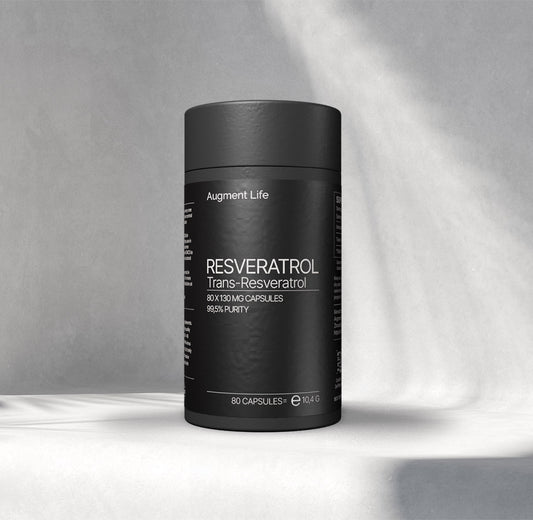
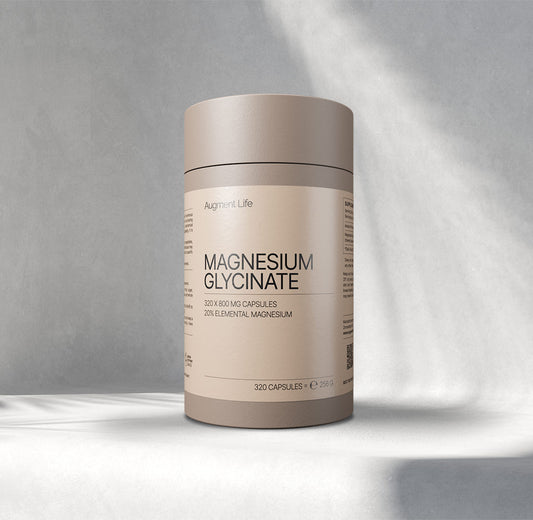
Taking a cupboard full of supplements every day?
Many of our customers take NR in the morning, magnesium before bed and creatine after training. Keeping track can be tedious, and it is easy to miss a dose or double up on supplements. The Comprehensive Longevity Stack combines key longevity compounds with daily vitamins and minerals in a single scoop.
So what is actually in it, and what does the research say about each ingredient?
What Does 1 Scoop Contain?
Each 15 g scoop of the Comprehensive Longevity Stack, a daily powder with a natural lime flavour, provides:
- Creatine monohydrate: 5 g
- Magnesium glycinate: 1,600 mg, giving 320 mg of magnesium
- L-glutathione: 500 mg
- Nicotinamide riboside (NR): 300 mg
- Coenzyme Q10 (CoQ10), as ubiquinone: 200 mg
- Hyaluronic acid: 200 mg
- L-theanine: 200 mg
- Spermidine: 8 mg
- Vitamin D3: 100 µg (4,000 IU)
- Vitamin K2: 75 µg
- 8 B vitamins: B1, B2, B3, B5, B6, biotin (B7), folic acid (B9) and B12
The Stack is vegan and contains no caffeine, magnesium stearate, silicon dioxide, gluten, dairy or soy, and is sweetened with erythritol and stevia.
What Does the Research Say About NR, CoQ10 and Creatine?
Nicotinamide Riboside (NR)
NR is a form of vitamin B3 that the body turns into nicotinamide adenine dinucleotide (NAD+), a molecule your cells need to make energy and repair DNA (1). NAD+ drops with age in animals (1), and in people it has been found to fall in the skin (2), brain (3) and blood plasma (4), though results in blood vary (5).
NR is one way to top it up. At 300 mg a day, it raised NAD+ in the blood by about half within 2 weeks in overweight adults aged 40 to 60, with no flushing (6). It has been well tolerated in people, and research into what higher NAD+ means for health and ageing is ongoing (7).
Coenzyme Q10 (Ubiquinone)
CoQ10 helps your mitochondria, the energy centres of your cells, turn food into energy (8). Your body makes its own, but levels rise into adulthood and fall in older age, judging by blood samples from 860 European adults (9). Taken as a supplement, it improved some markers of oxidative stress, though whether people notice a difference is still unclear (10).
Creatine Monohydrate
For active adults, creatine increases physical performance in successive bursts of short-term, high-intensity exercise, with the benefit seen at a daily intake of 3 g (11). Combined with resistance training, it added a little lean mass in older adults (12) and in postmenopausal women, where 5 g a day or more also improved leg strength (13). Creatine may help memory too, with larger effects seen in women and in adults under 60 (14).
What Does the Research Say About Glutathione and Spermidine?
L-Glutathione
Glutathione is the most abundant antioxidant your cells make (15). Taken at 250 or 1,000 mg a day for 6 months, it raised blood levels in healthy adults, by up to a third at the higher dose, and at 1,000 mg a day the activity of natural killer cells, part of the immune system, more than doubled after 3 months (16). Healthy women taking glutathione for 12 weeks also had fewer wrinkles at some skin sites than on a placebo (17). A shorter, 4-week study at 1,000 mg a day found no change in markers of oxidative stress (18).
Spermidine
Spermidine is a polyamine found in wheat germ, soy, mushrooms and aged cheese. In lab studies it switches on autophagy, the process cells use to clear out damaged parts (19). In people, research has focused on memory: in a small pilot study of 30 older adults with memory concerns, those taking a spermidine-rich wheat germ supplement for 3 months did moderately better on memory tests than those on a placebo (20). Larger, longer research has not yet confirmed this (21).
What Does the Research Say About L-Theanine, Magnesium and Hyaluronic Acid?
L-Theanine
L-theanine is an amino acid found in green tea (22). In research involving nearly 900 people, it improved sleep quality ratings and how people felt during the day, and helped them fall asleep slightly faster, though it was often combined with other ingredients (23). Taking 200 to 400 mg a day may also help people cope with stress (22).
Magnesium Glycinate
Magnesium contributes to normal energy-yielding metabolism, the reduction of tiredness and fatigue, normal psychological function and normal functioning of the nervous system (11). It has also been studied for sleep: in 3 small trials, older adults with sleep problems fell asleep about 17 minutes faster (24), and adults who reported poor sleep rated it slightly better after 4 weeks on magnesium glycinate than on a placebo (25).
Hyaluronic Acid
Hyaluronic acid holds water in the skin (26), and the amount in skin falls with age (27). Taken at 120 mg a day for 12 weeks, it improved skin moisture, elasticity and wrinkle measurements compared with a placebo in 40 adults (28).
What Do the Vitamins in the Comprehensive Longevity Stack Do?
- Vitamin D3 (100 µg) contributes to normal absorption/utilisation of calcium and phosphorus, the maintenance of normal bones and the normal function of the immune system (11).
- Vitamin K2 (75 µg) contributes to the maintenance of normal bones (11).
- The B vitamins contribute to normal energy-yielding metabolism (B1, B2, B3 and B5), normal functioning of the nervous system (B1, B6 and B12) and normal red blood cell formation (B6 and B12). Folate (B9) contributes to normal blood formation, and biotin, riboflavin and niacin contribute to the maintenance of normal skin (11).
Does the Comprehensive Longevity Stack Replace a Multivitamin?
It covers vitamin D, vitamin K2, the B vitamins and magnesium, but it is not a full multivitamin. Omega-3, zinc, selenium, iodine, iron, calcium and vitamins A, C and E mostly come from a varied diet, and a blood test with your doctor will show if you need more.
How Should You Take the Comprehensive Longevity Stack?
Mix 1 scoop (15 g) with 250 ml of water or a smoothie, ideally in the morning or afternoon with a meal containing healthy fats, and take it daily, as the research above looked at weeks or months of use. Don’t take more than 1 scoop a day or combine it with a separate vitamin D or B complex supplement. The Stack is not suitable for children or during pregnancy or breastfeeding, and if you take regular medication, such as blood thinners, check with your doctor or pharmacist first.
The Takeaway
No supplement replaces good sleep, regular exercise and a varied diet, and those habits have far more influence on how you age. If you have the basics covered, the Stack puts creatine, NR, CoQ10, spermidine and glutathione alongside everyday vitamins and minerals, without a cupboard of jars.
Product mentioned in this article:
Food supplements are not a substitute for a varied, balanced diet and a healthy lifestyle. This article is not medical advice.
Read More
Literature Sources
- Covarrubias AJ, Perrone R, Grozio A, Verdin E. NAD+ metabolism and its roles in cellular processes during ageing. Nat Rev Mol Cell Biol. 2021;22(2):119-41. doi:10.1038/s41580-020-00313-x
- Massudi H, Grant R, Braidy N, Guest J, Farnsworth B, Guillemin GJ. Age-associated changes in oxidative stress and NAD+ metabolism in human tissue. PLoS One. 2012;7(7):e42357. doi:10.1371/journal.pone.0042357
- Zhu XH, Lu M, Lee BY, Ugurbil K, Chen W. In vivo NAD assay reveals the intracellular NAD contents and redox state in healthy human brain and their age dependences. Proc Natl Acad Sci U S A. 2015;112(9):2876-81. doi:10.1073/pnas.1417921112
- Clement J, Wong M, Poljak A, Sachdev P, Braidy N. The plasma NAD+ metabolome is dysregulated in “normal” aging. Rejuvenation Res. 2019;22(2):121-30. doi:10.1089/rej.2018.2077
- Trętowicz MM, Scantlebery AML, Schomakers BV, et al. Human whole-blood NAD+ levels do not vary with age or lifestyle interventions. Nat Metab. 2026;8(6):1282-90. doi:10.1038/s42255-026-01537-5
- Conze D, Brenner C, Kruger CL. Safety and metabolism of long-term administration of NIAGEN (nicotinamide riboside chloride) in a randomized, double-blind, placebo-controlled clinical trial of healthy overweight adults. Sci Rep. 2019;9(1):9772. doi:10.1038/s41598-019-46120-z
- Gallagher C, Emmanuel OO. NAD+ supplementation for anti-aging and wellness: a PRISMA-guided systematic review of preclinical and clinical evidence. Ageing Res Rev. 2026;116:103057. doi:10.1016/j.arr.2026.103057
- Mantle D, López-Lluch G, Hargreaves IP. Coenzyme Q10 metabolism: a review of unresolved issues. Int J Mol Sci. 2023;24(3):2585. doi:10.3390/ijms24032585
- Niklowitz P, Onur S, Fischer A, Laudes M, Palussen M, Menke T, et al. Coenzyme Q10 serum concentration and redox status in European adults: influence of age, sex, and lipoprotein concentration. J Clin Biochem Nutr. 2016;58(3):240-5. doi:10.3164/jcbn.15-73
- Akbari A, Mobini GR, Agah S, Morvaridzadeh M, Omidi A, Potter E, et al. Coenzyme Q10 supplementation and oxidative stress parameters: a systematic review and meta-analysis of clinical trials. Eur J Clin Pharmacol. 2020;76(11):1483-99. doi:10.1007/s00228-020-02919-8
- Commission Regulation (EU) No 432/2012 of 16 May 2012 establishing a list of permitted health claims made on foods, other than those referring to the reduction of disease risk and to children’s development and health. Off J Eur Union. 2012;L136:1-40. eur-lex.europa.eu/eli/reg/2012/432/oj
- Forbes SC, Candow DG, Ostojic SM, Roberts MD, Chilibeck PD. Meta-analysis examining the importance of creatine ingestion strategies on lean tissue mass and strength in older adults. Nutrients. 2021;13(6):1912. doi:10.3390/nu13061912
- Naddafha S, Antonio J, Kreider RB, Stout JR. Creatine monohydrate for lean mass, strength, and bone density in postmenopausal women: a systematic review and meta-analysis. J Int Soc Sports Nutr. 2026;23(1):2668435. doi:10.1080/15502783.2026.2668435
- Xu C, Bi S, Zhang W, Luo L. The effects of creatine supplementation on cognitive function in adults: a systematic review and meta-analysis. Front Nutr. 2024;11:1424972. doi:10.3389/fnut.2024.1424972
- Forman HJ, Zhang H, Rinna A. Glutathione: overview of its protective roles, measurement, and biosynthesis. Mol Aspects Med. 2009;30(1-2):1-12. doi:10.1016/j.mam.2008.08.006
- Richie JP, Nichenametla S, Neidig W, Calcagnotto A, Haley JS, Schell TD, Muscat JE. Randomized controlled trial of oral glutathione supplementation on body stores of glutathione. Eur J Nutr. 2015;54(2):251-63. doi:10.1007/s00394-014-0706-z
- Weschawalit S, Thongthip S, Phutrakool P, Asawanonda P. Glutathione and its antiaging and antimelanogenic effects. Clin Cosmet Investig Dermatol. 2017;10:147-53. doi:10.2147/CCID.S128339
- Allen J, Bradley RD. Effects of oral glutathione supplementation on systemic oxidative stress biomarkers in human volunteers. J Altern Complement Med. 2011;17(9):827-33. doi:10.1089/acm.2010.0716
- Madeo F, Eisenberg T, Pietrocola F, Kroemer G. Spermidine in health and disease. Science. 2018;359(6374):eaan2788. doi:10.1126/science.aan2788
- Wirth M, Benson G, Schwarz C, Köbe T, Grittner U, Schmitz D, et al. The effect of spermidine on memory performance in older adults at risk for dementia: a randomized controlled trial. Cortex. 2018;109:181-8. doi:10.1016/j.cortex.2018.09.014
- Schwarz C, Benson GS, Horn N, Wurdack K, Grittner U, Schilling R, et al. Effects of spermidine supplementation on cognition and biomarkers in older adults with subjective cognitive decline: a randomized clinical trial. JAMA Netw Open. 2022;5(5):e2213875. doi:10.1001/jamanetworkopen.2022.13875
- Williams JL, Everett JM, D’Cunha NM, Sergi D, Georgousopoulou EN, Keegan RJ, et al. The effects of green tea amino acid L-theanine consumption on the ability to manage stress and anxiety levels: a systematic review. Plant Foods Hum Nutr. 2020;75(1):12-23. doi:10.1007/s11130-019-00771-5
- Bulman A, D’Cunha NM, Marx W, Turner M, McKune A, Naumovski N. The effects of L-theanine consumption on sleep outcomes: a systematic review and meta-analysis. Sleep Med Rev. 2025;81:102076. doi:10.1016/j.smrv.2025.102076
- Mah J, Pitre T. Oral magnesium supplementation for insomnia in older adults: a systematic review & meta-analysis. BMC Complement Med Ther. 2021;21(1):125. doi:10.1186/s12906-021-03297-z
- Schuster J, Cycelskij I, Lopresti A, Hahn A. Magnesium bisglycinate supplementation in healthy adults reporting poor sleep: a randomized, placebo-controlled trial. Nat Sci Sleep. 2025;17:2027-40. doi:10.2147/NSS.S524348
- Papakonstantinou E, Roth M, Karakiulakis G. Hyaluronic acid: a key molecule in skin aging. Dermatoendocrinol. 2012;4(3):253-8. doi:10.4161/derm.21923
- Longas MO, Russell CS, He XY. Evidence for structural changes in dermatan sulfate and hyaluronic acid with aging. Carbohydr Res. 1987;159(1):127-36. doi:10.1016/s0008-6215(00)90010-7
- Hsu TF, Su ZR, Hsieh YH, Wang MF, Oe M, Matsuoka R, Masuda Y. Oral hyaluronan relieves wrinkles and improves dry skin: a 12-week double-blinded, placebo-controlled study. Nutrients. 2021;13(7):2220. doi:10.3390/nu13072220